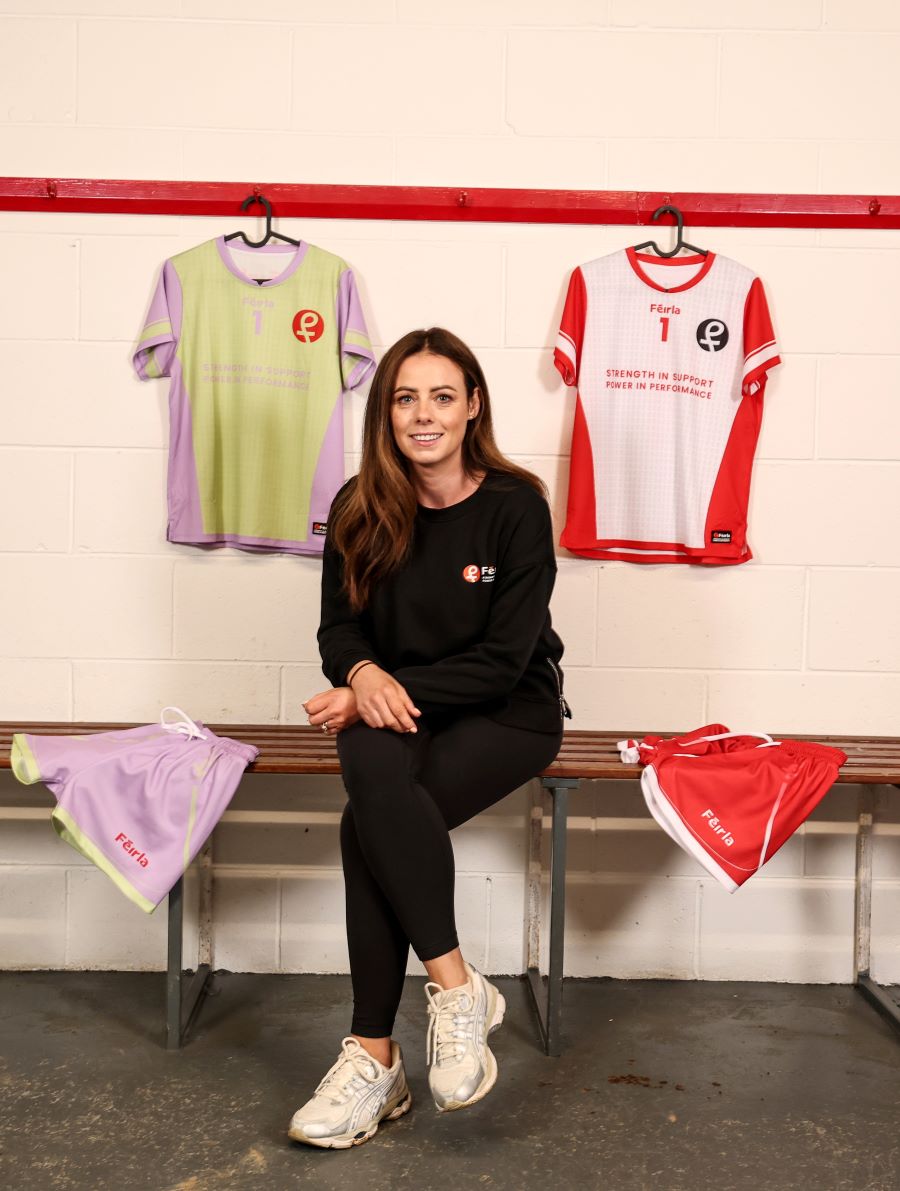
Féirla, Ireland’s first-ever sportswear brand with Gaelic games in mind, designed specifically for female bodies, has launched its debut collection. Acting Niamh Devereux chats to founder Margaret Walsh, a Co Louth based physiotherapist, to find out more
Hi Margaret. You say “for too long , girls and women have stepped onto pitches feeling exposed, self-conscious or uncomfortable”. Why do you think something so fundamental was overlooked for so long?
I think a large part of it comes down to the fact that women were never the starting point. For years, sports kit has been designed around male bodies and then adapted for female athletes for what’s often referred to as “shrink it and pink it.” In reality, it’s still fundamentally a piece of male kit, just made smaller, without truly considering the differences in female anatomy, movement, or needs. That reflects a wider issue in sport and science. Much of the research we’ve relied on has historically been based on male athletes. Studies like Invisible Sportswomen have highlighted just how significant that gap is, with as little as 6% of research focused specifically on female athletes. When the evidence base is limited, it naturally impacts how products, training, and support systems are developed.
We also have to recognise that women’s participation in sport, at scale, is relatively recent. For a long time, there simply wasn’t the same demand or expectation for female-specific kit so it wasn’t prioritised. But that has changed. Women’s sport is growing rapidly, the level of performance is incredible, and expectations are rightly higher. So now, it’s not just about participation , it’s about ensuring female athletes are properly supported. And that includes something as fundamental as the kit they wear. Féirla is all about tackling those shortcomings of traditional GAA kits by designing shorts that truly meet the needs of women athletes, empowering them to keep playing the game they love.
You have been involved in Gaelic games for over twenty years both as a player and physiotherapist, so this is an issue you have been long familiar with ?
Yes, but what really struck me over time was how quietly it was experienced. I think I always assumed everyone knew this was an issue, but in reality, it was almost unspoken. Girls would adjust their shorts, feel uncomfortable, feel exposed but it was rarely questioned. Instead, they often turned it back on themselves, thinking it was their body, or even comparing themselves to other girls and how they wore their kit. Very little attention was actually given to the product itself ,whether it was designed in a way that truly worked for them. And I do think, as women, we can be very quick to internalise things like that to adapt, to make do, rather than challenge it. Whereas there’s probably a slightly more straightforward approach elsewhere of, “this doesn’t work, so let’s fix it.” Looking back, that was the part that stayed with me most not just the issue itself, but how normalised it had become. Yet when you speak to women and girls and relate it to them and open the conversation, there isn’t one female who has not experienced it at some age or some level, but brushed it off … or stopped playing.
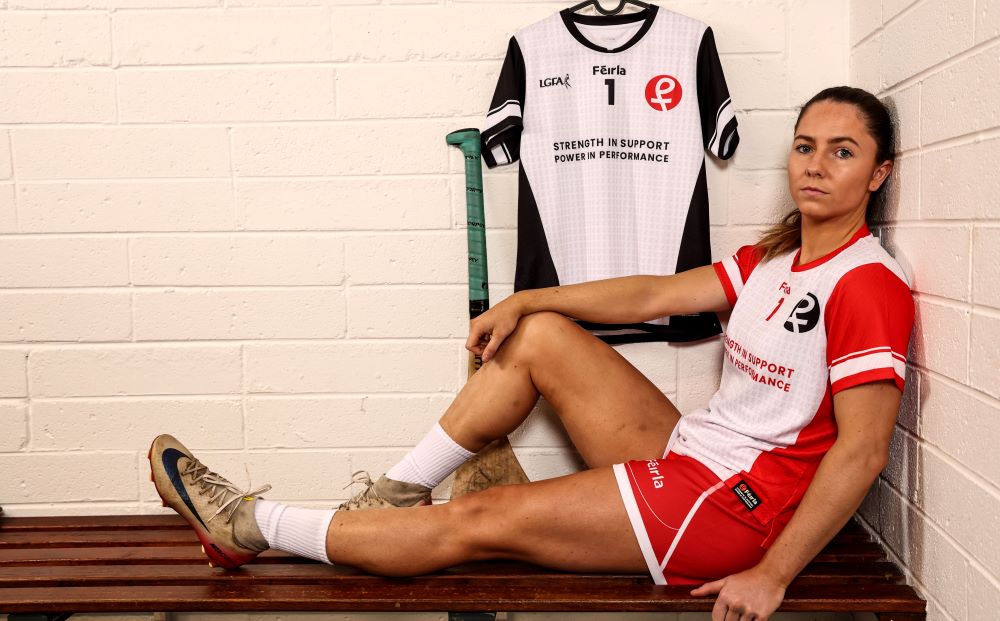
Of course, the situation with the camogie players and skorts was a high talking point last year. Was there a particular moment you realised you wanted to do something about this situation?
Very much so, but in a slightly different way for me. I had actually started this journey over three years earlier, and it hadn’t been straightforward. There were a lot of setbacks along the way, and I had reached a point where I felt this was my last real attempt. I had taken time out of my clinic, committed to further study with a postgraduate focus on the female athlete in Dublin City University, and fully immersed myself in trying to understand and solve this properly.
By the time the headlines around the skort emerged, I was already about nine months into developing Féirla – working with designers, developing samples, and sourcing fabrics. So in many ways, it wasn’t new to me these conversations had been happening quietly for years. What struck me, though, was the visibility of it. It brought something into the public space that had long been under the surface. And while the focus was on skorts, my immediate thought was that it went much deeper than that, it wasn’t just one garment, it was a broader issue around how female athletes are considered.
I felt incredibly proud watching those players take a stand. The journey up to that point had felt quite lonely at times, and suddenly there was this collective voice. Seeing how strongly the girls felt about it gave me a renewed sense of belief. It made me realise I wasn’t alone in seeing the problem and more importantly, that it mattered. That moment gave me the push to keep going, to see Féirla through. It genuinely felt like it was something I was meant to finish.
From your experiences, what were the challenges female players were dealing with that weren’t being talked about?
There are quite a few, and many of them sit quietly beneath the surface. Puberty is a big one. It’s a time where girls are experiencing significant physical and hormonal changes, but often without a full understanding of what’s happening in their own bodies. The menstrual cycle, for example, can influence energy levels, coordination, mood, and overall performance yet many girls aren’t supported in understanding that, and each experience is completely individual. Most girls don’t even know how to track their cycle and how that can be immensely beneficial for them. That can lead to frustration, not just for the athlete, but within the wider environment. Coaches may not always have the knowledge or language around it either, so girls can end up staying silent, assuming they’re the only one struggling, or that they just need to push through.
There are also more hidden issues, like urinary leakage during sport. Research emerging from Dublin City University in Gaelic games has shown that this is more common than people might expect among female athletes, yet it’s very rarely discussed openly. Again, it’s something many deal with quietly. And then at the other end of the spectrum, there’s return to sport after having a baby. For a long time, it was almost assumed that once you stepped away for pregnancy, that was the end of your sporting journey. There has been very little structured guidance around how to safely and effectively return. Even now, it’s only in recent years that we’re seeing progress with organisations like FIFA introducing more formalised postpartum return-to-play guidelines in 2026. When you look across all of that from adolescence through to motherhood it highlights a consistent theme. Female athletes have often had to navigate their sporting lives without the same level of understanding, support, or structure. And while things are improving, there’s still a long way to go.
Research has shown that Ireland is losing its female athletes at a dramatic rate with 1 in 5 girls dropping out of sport between primary and post primary school – how much does discomfort and insecurities around kit contribute to this?
It’s one part of a much bigger picture, but it’s a really important and often underestimated part and crucially, it’s something we can change. We know from research that dropout rates increase significantly during adolescence, and that confidence, body image, and environment all play a role. When a girl doesn’t feel comfortable in what she’s wearing, or feels exposed or unsupported, it can absolutely influence how she experiences sport. It just makes sense… yet its been historically overlooked. What’s interesting is that recent qualitative research with players in the Women’s League of Ireland has started to highlight just how much kit actually matters. Players consistently described being given men’s-fit shorts and then having to adapt them sizing up, rolling waistbands, even wearing youth sizes just to make them work.
It’s not just a one-off inconvenience; it becomes an ongoing effort, something they have to think about every time they train or play. And over time, that adds up. What also came through strongly in that research is that kit isn’t just functional it sends a message. When female athletes are consistently given ill-fitting or adapted gear, it can contribute to a feeling that they’re not being fully considered or prioritised. So while kit might seem like a small detail from the outside, it plays into a much bigger experience. It affects comfort, confidence, and even a sense of belonging within sport. And when you’re looking at why girls disengage, those “small” factors can quietly become deciding ones.
Tell us how you attempted to address the various concerns with Féirla and its different styles.
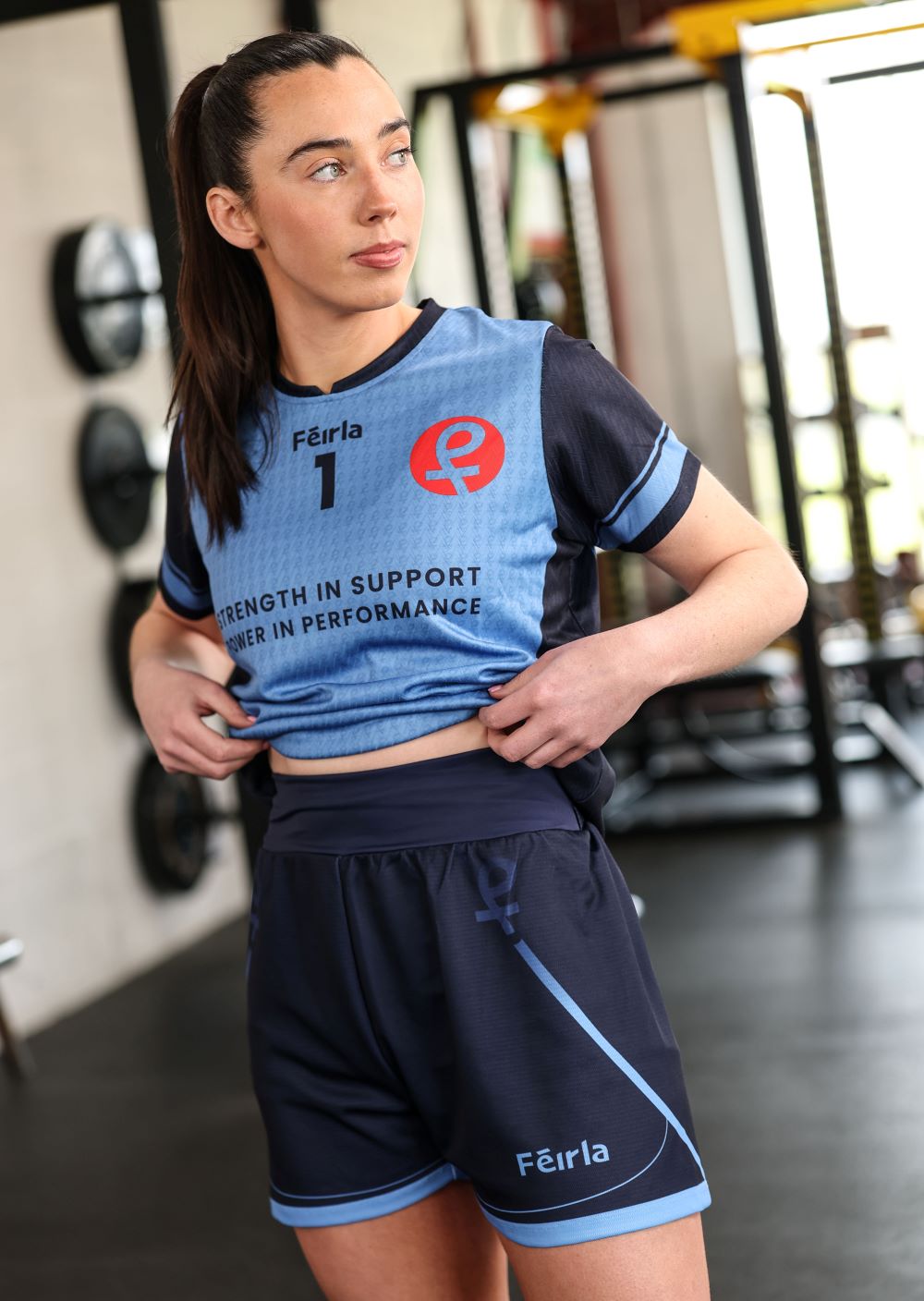
Firstly, it started from a completely different place ,designing for female bodies from the outset, rather than adapting templates based on male anatomy. I also wanted to take a broader view of the female athlete across the lifespan, particularly from puberty onwards, because that’s where I see so many of the challenges arise through my work. It was about listening to what girls and women were actually experiencing at those stages and responding to that. At its core, it comes back to giving female athletes a choice. We developed a number of different styles because not every player wants or needs the same thing. Some prefer a higher waistband for support, others want compression, while some want a more classic fit but one that is designed specifically for female proportions.
We also introduced period-proof technology, which hadn’t previously existed in Gaelic games. Everything comes back to that central idea when players have choice, they feel more comfortable. And when they feel comfortable, it allows for greater confidence and ultimately better performance.
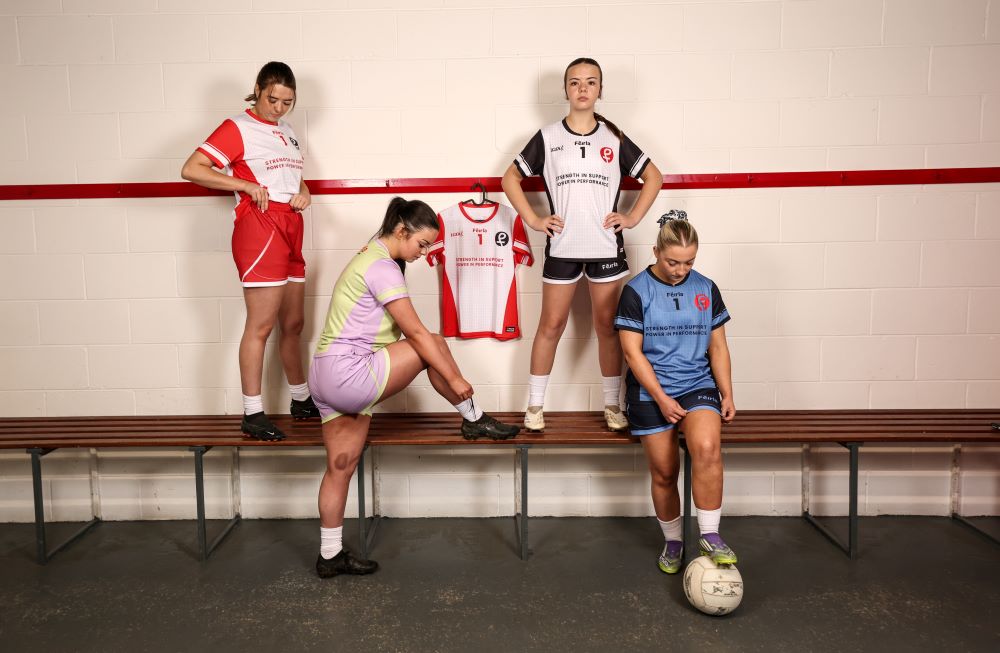
Yes; the Neala shorts, Ireland’s first period-proof Gaelic games short, is particularly meaningful as period anxiety is often an unspoken challenge for athletes.
Yes, I do believe this is incredibly meaningful, both personally and for the future of Gaelic games and female sport more broadly. Menstruation is still something that isn’t openly spoken about, particularly at grassroots level. Simple things, like whether there are sanitary facilities available when girls travel to training or matches, can create real anxiety. When you combine that with wearing shorts that don’t fit properly, managing a sanitary product, and trying to move freely to sprint, jump, kick all while your body may not feel the way it usually does, it’s a lot for a young athlete to carry.
The Neala short is about taking away some of that stress. It gives reassurance, but it also allows girls to feel the same as their teammates on the outside because the period protection is built in. That, in itself, is a real shift. On a personal level, it means even more. The short is named after my daughter, Neala, because ultimately this is about her generation and creating a better, more supportive experience in sport for her and for girls like her.
The brand is clearly proudly Irish, from its name to how you have identified each of the shorts, all centred around female empowerment.
Yes, there was never a question in my mind about how I wanted Féirla to feel. From the very beginning, I didn’t want the function of the shorts to define them. Instead, I wanted each style to carry a name, a strong Irish female name, so that when a girl chooses her short, she’s choosing a feeling and what it represents: strength, confidence, movement. Not labels like “period protection” or “tummy support.” Instead, choose Méabh or Fiadh! Those features are important, but they shouldn’t be something that defines or limits how a female athlete feels. They’re simply part of being female and females are resilient, strong, and powerful.
The name Féirla itself reflects that meaning. The “F” stands for female where it begins, and where it should always begin. “EIR” comes from Éiru, the female goddess after whom Ireland is named, grounding the brand in Irish identity. And “LA” comes from the end of my daughter’s name, Neala which fittingly means “female Irish champion.” For me, it represents the past, the present, and the future.
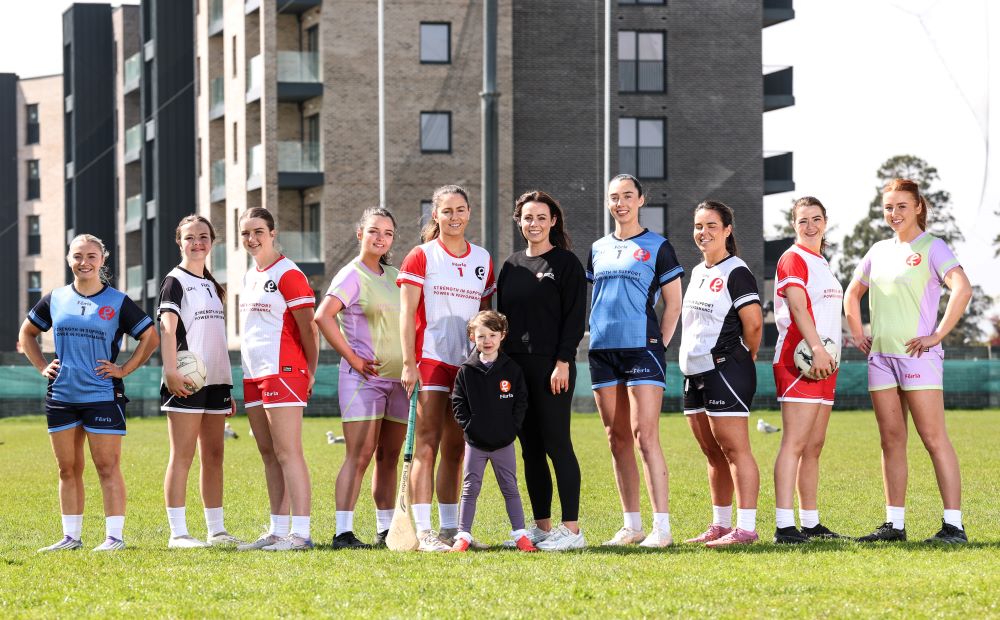
The response from players, you say, has been overwhelming. Tell us more ?
Throughout the journey, I was very lucky to have my husband’s six nieces all of whom play football help with early trials and testing. That gave me really valuable insight at the beginning. Once I was happy with the products, we moved into proper club fit sessions, and the response was very consistent. Girls would say, “we never realised the shorts didn’t fit us or that they could feel this different.” You really don’t know what you don’t know. What also became clear very quickly is that there isn’t one “perfect” short. Every girl had a different preference some leaned towards support, others towards a more relaxed feel. There’s no single winner, and that’s exactly the point. Beyond the fit, what stood out most was the impact of having a choice. It created a sense of being listened to, of finally having something designed specifically for them.
Since launching, the feedback has been incredibly positive. We’ve had women say they would never have worn shorts before, but have now bought them and are wearing them for running or to the gym which is reassuring, especially as they’re not even playing Gaelic games. At the same time, we’re still learning. It’s a new sizing concept, and it will take time for players to find their ideal fit, particularly when they’re so used to wearing men’s shorts. We’re very open to feedback and see this as an ongoing process. But the consistent message we’re hearing is that girls feel comfortable, supported, and confident and that nothing feels exposed. That, for me, is everything.
Is getting Féirla shorts into the hands of players and clubs across the country the ultimate goal?
Of course, I’d love to see Féirla in clubs and counties across Ireland, giving teams real choice in what they wear. But beyond that, it’s about contributing to a wider shift in how female athletes are considered not just in Gaelic games, but across sport as a whole. A big part of that for me is education. Féirla was never just about sportswear it’s about supporting female athletes with the knowledge and understanding they need around their bodies, their performance, and their health. That piece is just as important.
When I started this journey, I was told more than once that this wasn’t a real problem, or that it wasn’t worth pursuing. In what has traditionally been a male-dominated space, those voices can be quite loud. But when you look at the research, the dropout rates, and the broader gaps in women’s health and sport, it becomes clear that change is needed. We’ve already developed a number of designs beyond what people have seen so far, and there are bigger plans to continue expanding both in product and in how we support female athletes more widely. For me, it always comes back to the future , to girls like my daughter and doing what I can now to help shape a sporting environment that feels more supportive, more considered, and ultimately somewhere they want to stay.
For more: feirla.com