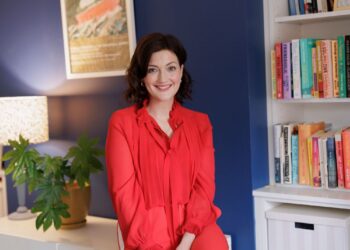
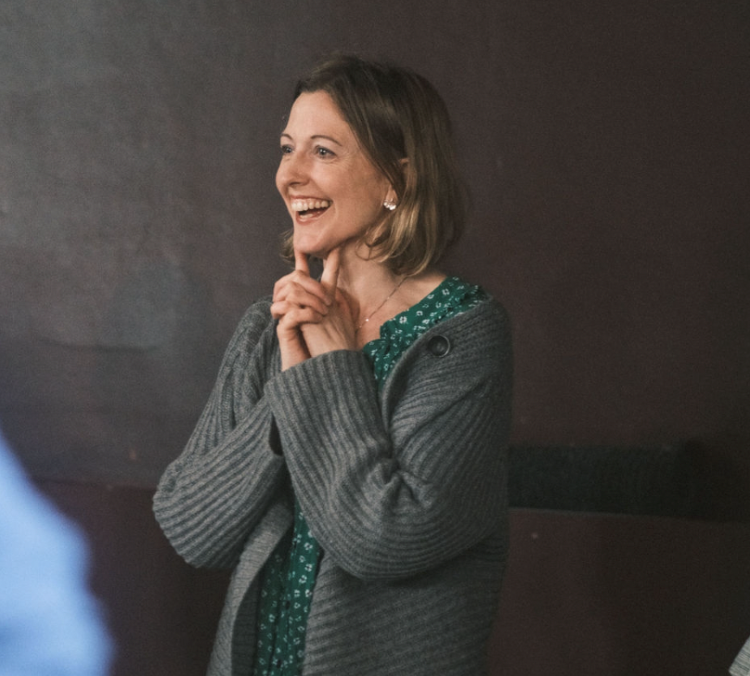
As April marks World Autism Month, we caught up with Jody O’Neill, an autistic writer, actor and advocate on her autism diagnosis and the importance of representation in media.
Firstly, tell us a little bit about yourself.
We moved a lot when I was a child, but I did most of my growing up in Cobh in County Cork. I moved to Dublin when I was 17 to go to university and have spent most of the past thirty years living here. I studied theatre and also dance, and after graduating worked as an actor for several years, before I began making my own work. I worked a lot in restaurants early in my career and then began to look for ways to have a more sustainable income so moved into writing and producing my own work. For the past year, I’ve been mainly working in the games industry as a producer with a company called StoryToys that makes apps for kids.
Tell us about your autism diagnosis, what did that look like for you?
In 2017, I was doing a research and development project for a play about autism, which became What I (Don’t) Know About Autism. Even though it wasn’t that long ago, there wasn’t the same volume of literature and information available as there is now, and so a lot of my research into lived experience involved reading autobiographies and essay anthologies. I’d always felt slightly out of place in the world, but hadn’t been able to name my experience until I heard it echoed by so many others. I gradually began to realise I was autistic and this was confirmed through a formal diagnosis in 2019. The diagnostic process was interesting because it was very male-skewed and missed a lot of details because we were only starting to understand the way in which many people, women in particular, mask. There was a sense of questioning from the clinician about why I would want to pursue this label when I was getting on ‘fine’. I just don’t think there was the same understanding of the difference between how someone presents in the world and how they are internally that we’re moving towards now.
How would you describe your experience of the world in ways that non-autistic people might not immediately understand?
That’s a tricky question, because I don’t know what it is like to be non-autistic in the world. I’ve always experienced the world this way and it’s hard to draw out specifically what might be hard for a non-autistic person. If I had to hone in on two things, I would say that my sensory experience is different. I get incomprehensible joy from sensory experiences in nature, or even in cooking and baking that I don’t see reflected to the same degree in non-autistic people. And on the flip side, my experience of sensory overload is extremely intense. The second thing that might not be easy to understand is that my capacity changes massively from day-to-day and from one environment to another. I think we can often expect people to be just one thing, and I know that the experience of being autistic (for me, anyway) is constantly in flux, so in terms of the sensory experience, something that feels fine one day – like the sound of a washing machine – can be really challenging another day or time due to factors like energy levels, environment, what’s come before it, etc. People may expect autism to be a continuum, but it isn’t.
What gaps do you still see in how autism is represented in Irish media and culture?
There’s still this tendency to highlight the ‘extraordinary’ and overlook anything outside of the stereotypical superpower version of autism, or the very high support needs experience. This means that we don’t see enough representation or celebration of the lives of autistic people who sit between these experiences. We miss out on nuance and fail to represent the challenges that many autistic people experience, socially, in education or in the workplace. I think we’re also – and this is not just an Irish issue – still falling back on depicting autistic traits in characters onscreen and in literature without sufficient exploration of the depth and complexity of those characters.
How have you navigated environments, in both work and your personal life, that weren’t designed with neurodivergent people in mind?
Most environments and systems were not, and are still not, designed with neurodivergent people in mind, and it’s a huge barrier to people being able to have the best possible chance of a successful or good life, whatever that might look like to them. Right from the beginning of our experiences with education, we are encountering systems that are not designed for us, and this continues all the way through life – in employment settings, healthcare settings, social settings and more. There is a positive move towards universal design, and a new understanding that if we design experiences and environments with neurodivergent people in mind then they are more accessible for everyone. But we’re still a long way off this being standard practice.
What do you wish people better understood during Autism Awareness Month?
This is more of an action than a case of understanding, but presuming competence is huge. Just because a person doesn’t communicate or present as you might expect doesn’t mean that they are not intelligent or capable of deeply experiencing the world. People are still written off, and having their human rights denied simply because they don’t present in a way that’s seen as typical. Even if someone doesn’t speak it doesn’t mean they can’t understand and communicate. Even if they move differently or can’t sit still, it doesn’t mean they’re not listening and feeling the full range of emotions everyone else feels.
What are your plans for the future?
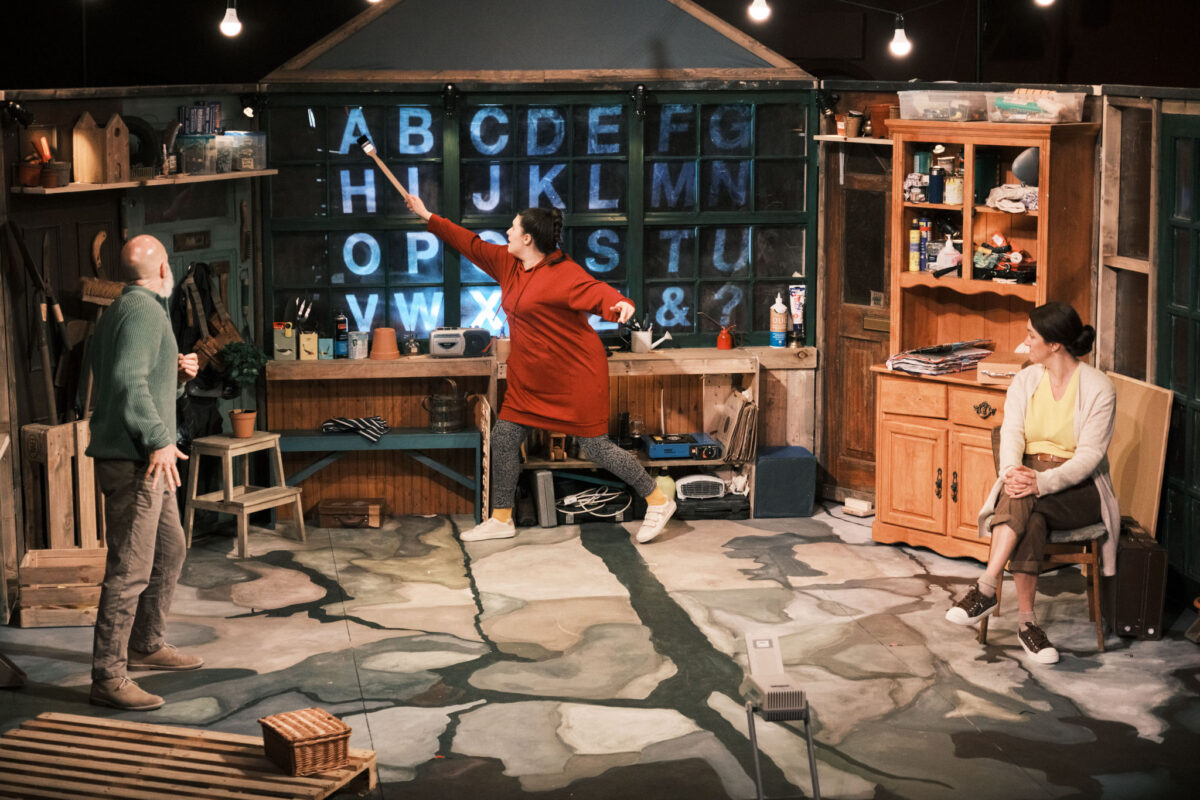
I have two very exciting things coming up in April. Two years ago, I premiered a play called Grace at Cork Midsummer Festival, Dublin Theatre Festival and Baboro with Graffiti Theatre Company and Once Off Productions. Grace is currently back in rehearsals ahead of a national tour for family and schools’ audiences. You can read about Grace and book tickets here: In addition to that, I have a two-day festival on the 24th and 25th of April in Cork with Cork Opera House and UCC. Some of the highlights include a performance of Unveiled by Max Whelan (The Assembly), an event with Aideen Barry and Seán Ronayne, a reading and conversation with Fiacre Ryan (Speechless), and an evening of work-in-progress sharings by neurodivergent artists and creatives. You can read more about it and book tickets here.