In our series, Growing Up Irish we chat with Irish people of note on their upbringing in Ireland and how it shaped them into the person they are today.
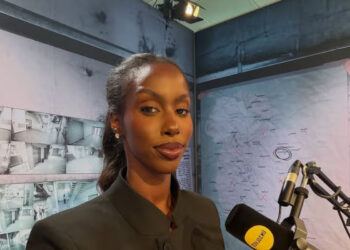
Louise O’Neill is an Irish author, shooting to literary fame with her novel Asking For It in 2015. Since then, Louise has gone from strength to strength with her most recent novel, Whatever Happened To Madeline Stone? out now. Growing up in West Cork, here Louise tells us about her earliest childhood memories and her innate ability to tell stories, which she credits her Irish upbringing for.
Where did you grow up and how would you describe that place to someone who has never been before?
I grew up in a small town in West Cork called Clonakilty, and it felt like something out of a picture book. The streets were lined with brightly painted shops and houses, flower baskets overflowing with geraniums and petunias as they spilled colour onto the pavement in the summer months. I spent my Sundays on the side of a football pitch, watching men in red and green GAA jerseys attempt to snatch victory from the jaws of defeat, and then I was given a bottle of Fanta and a packet of Taytos in the pub afterwards. Often this would be in DeBarras Folk Club with its wooden beams and low ceilings, walls covered with memorabilia from decades of gigs, people sitting on rickety stools as they listened to live music.
A short drive from town would bring you across the causeway to Inchydoney Island, that wild expanse of sea and sand, dunes and rock. It was here I lived until I was four years of age, right on the beach. It was different back then, before the hotel spa was built. You wouldn’t see another soul from September until May, and the locals who had built their houses overlooking the water liked it that way. Blow up the causeway, they joked to one another, let us make this an island again. Viva le Inchydoney! My father’s butcher shop was on the main street in Clonakilty. It had been in my family since 1919; the O’Neill roots had been dug deep in this town. The community was tightly knit- there were families like mine, who had been here for hundreds of years, and there were the Blow Ins, the artists and hippies who had arrived in Ireland in the sixties, bringing yoga mats and meditation circles with them. It was a small place but incredibly vibrant, full of colour and music and creativity and life.
What’s your earliest memory of growing up in Ireland?
I think for many of us who were children of the 90s, some of our most precious memories are centred around the Eurovision. From 1992-1996, Ireland won the contest four times and it also gifted us with the cultural phenomenon which was Riverdance. I have such a clear memory of watching that performance live in ’94. I was nine years old, sitting in my living room with my family, and I was utterly transfixed. This was before social media, there was no way of knowing how the rest of the country was responding to the show, let alone the rest of Europe, but even as a small child, I felt sure I was watching something important. It debuted a new kind of Irishness, one which was sexy and confident and modern.
What did being “Irish” mean to you when you were young — and has that meaning changed over time?
When I was young, I thought being Irish meant being friendly and welcoming, someone who was always up for the craic. An ability to laugh at oneself was vital – taking anything too seriously was very un-Irish. But I also think there was a determination to separate myself from the Ireland of old, the Church and the ‘diddly-eye music’, the Aran knit sweaters and Claddagh rings that the Irish Americans were so eager to wear. It all felt a bit twee, and not representative of the Celtic Tiger, when the country became synonymous with success and wealth. Over the last decade, I have re-examined those beliefs in an attempt to de-colonise my brain, and I have become determined to embrace that which is traditionally Irish. The music and the language and the stories and the sport and the tweed and the knitwear, all of it. I want us to be a country that honours its past and its culture, whilst still welcoming anyone who comes to these shores wanting to make a home here.
Are there any particularly ‘Irish’ traditions in your family?
My sister and I spent a lot of time with our maternal grandparents when we were kids. They had a dairy farm, and lived in the same farmhouse in which my grandfather had been born. It was a hybrid childhood of sorts, going between my life in Clonakilty, where I watched Home & Away and listened to the Spice Girls on my Walkman, and then collecting eggs from the hens for breakfast dressing in my Sunday best for Mass. My grandmother would “go visiting” which meant she would call to her siblings’ houses for a catch up, and she would take me and my sister with her. The drive seemed to last hours although now, as an adult, I realise that the distance was a matter of maybe fifteen kilometres. When we arrived, we would be given tea and sandwiches and a slice of apple cake by the mother of the house, and then there would be a game of cards played around the kitchen table, maybe a decade of the rosary if the mood was upon them. It felt like being transported back to the 1970s, a glimpse into what my parents’ childhood must have been like.
How do you carry Ireland with you when you’re working abroad or on a global stage?
I think Ireland is in the rhythm of how I speak, how I write, and most importantly, in how I think. The things I value most – family, authenticity, humour, story-telling, fairness and decency – stem from growing up in a culture which taught me some things were important. I am so proud to be Irish and I try my best to represent all that which is the best about us.
What’s the most Irish thing about you?
This is a cliché but probably my sense of humour and the instinct to turn anything into a story. Even the smallest moment gets retold with drama and a few embellishments – anything to get a laugh out of the person to whom the story is being told – and that instinct never really leaves you.