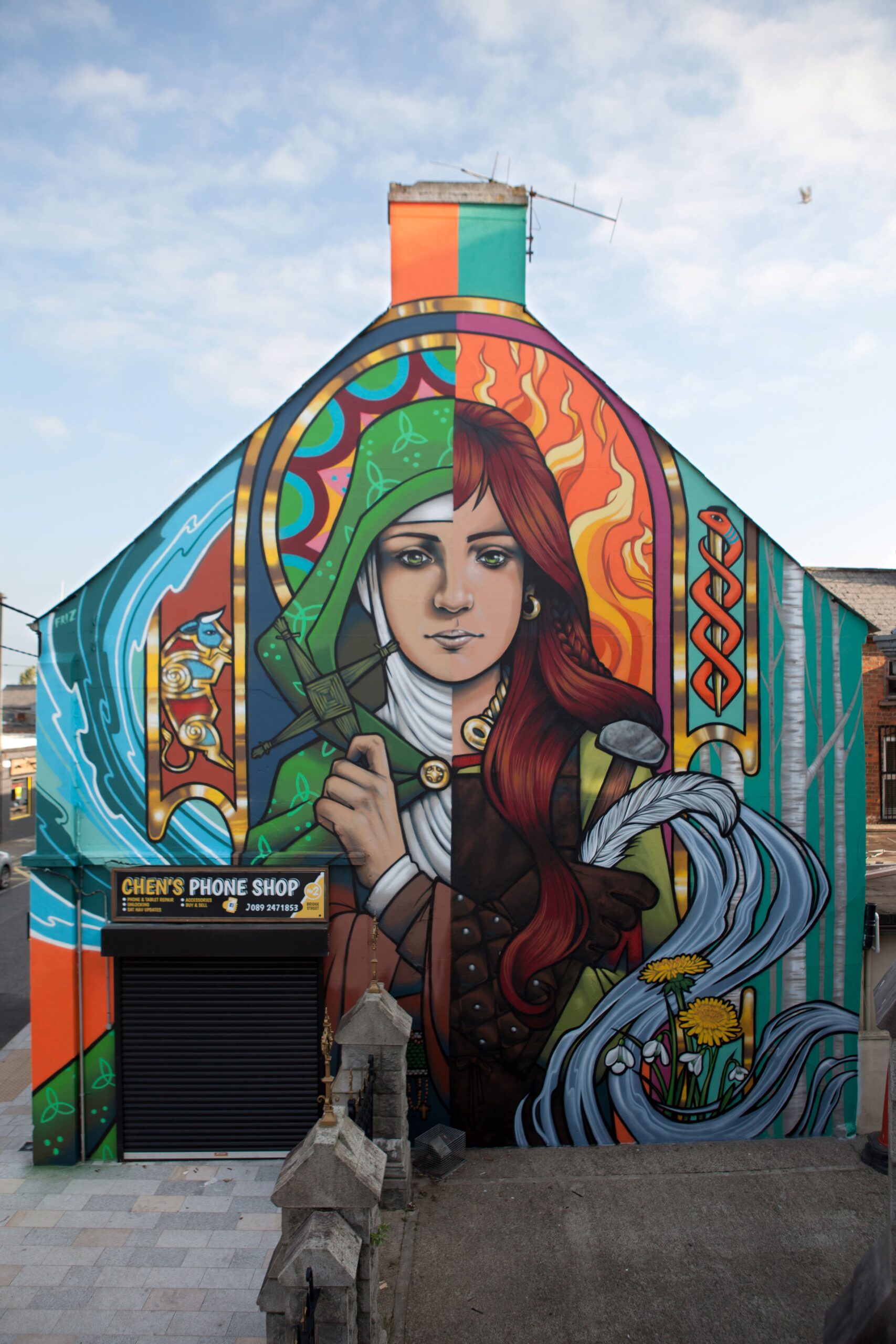
As we celebrate St Brigid’s Day, let’s take a look at the life and legacy of one of Ireland’s most famous saints.
St Brigid’s origins can be traced back to Faughart, just outside Dundalk. It is here that her life as a saint, goddess and enduring symbol of renewal, first unfolded. Today, her legacy is still celebrated in Faughart and wider Louth through seasonal rituals and community gatherings and events throughout the month of February and the rest of the year.
St Brigid’s day is celebrated on 1 February, Brigid’s birthday as she was born at sunrise on 1 February in 452 AD. Known for her compassion, hospitality, and miracles involving healing, protection, and abundance, her life bridges pagan and Christian Ireland, shaped by beliefs associated with healing, fertility, poetry and care for the land.
As a result of this, she is the patron saint of poets, healers, blacksmiths, farmers, midwives, newborns, fire, water, livestock, and the arrival of spring.
Founder of the first Irish monastery in County Kildare, Brigid’s life is closely linked to Imbolc, the ancient Celtic festival marking the return of light, the promise of spring, and the renewal of land and spirit. Therefore her feast day on 1 February marks the beginning of spring and longer, brighter days ahead.
In her lifetime, St Brigid is known for her stories and legends depicting her generosity. One popular legend says that St Brigid miraculously turned bathwater into beer for thirsty lepers and visiting priests, showcasing her compassion, generosity, and skill as a brewer. Bridgit’s legacy is based around hospitality and peacemaking and her values of social justice, peace, nature, and equality remain highly relevant in Irish culture today.
You might remember drawing or making a Brigid’s Cross in school. St Brigid is believed to have created the unique cross we’re all familiar with, which has since been named after her. Often created by weaving rushes into a cross shape, it is sometimes made from straw too. The narrative says that those who display the cross in their homes will keep evil, fire and hunger away from them.
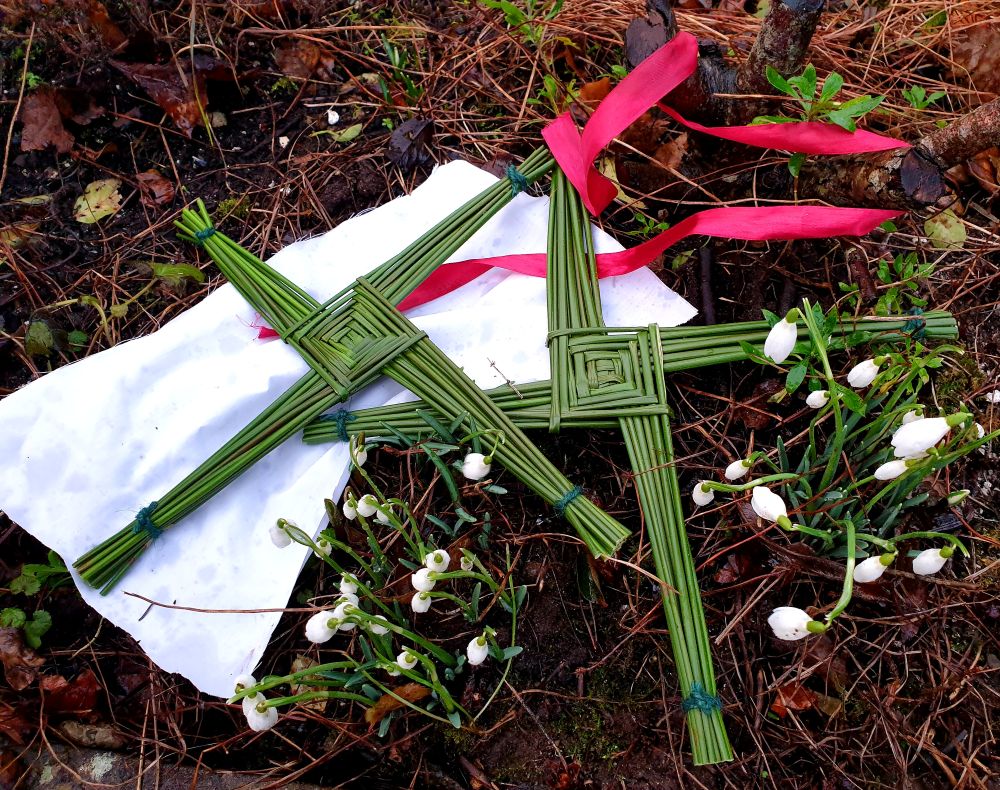
The cross’s origin tale is unknown but the most popular story is as follows. It’s believed that St Brigid sat by the deathbed of an old pagan Chieftan as he drifted in and out of consciousness. To calm his spirit and pass the time, Brigid is believed to have picked up rushes from the floor and weave them into the cross shape we know today. Explaining the meaning of the cross to the Chieftain, it’s believed that he requested to be baptized as a Christian before his passing.
Today, many people celebrate Brigid’s feast day by weaving their own cross on the eve of 1 February. It is also a popular Irish symbol among modern fashion, jewelry and interior designers.
It’s believed that St Brigid died at the age of approximately 75 years old of natural causes, around 525 AD. St Brigid is celebrated today for her long life dedicated to serving others and building communities around the country.