
In the latest edition of our award-winning series The Invisible Struggle in Irish Country Magazine, Deputy Editor Niamh Devereux investigates urinary tract infections and shares one Irish woman’s agony of dealing with recurrent UTIs.
It’s thought around 50% of women will experience a UTI at least once, while 20-40% of women who get one UTI will experience recurrent infections. Women get UTIs up to 30 times more than men, mainly due to the female lower urinary tract anatomy – a shorter urethra makes it easier for bacteria to reach the bladder – as well as hormonal fluctuations.
However, for a condition that seems so common, it is still shrouded in misunderstanding and mistreatment. In the new edition of the magazine, one woman in her 60s shares how she was prescribed up at least 12 antibiotics in one year for UTIs by her male GP and the toll that recurrent UTIs took on her.
“I’d finish an antibiotic and within a week the burning would be back again,” she says. “I’d drink loads of water and try to keep going, and then within another couple of weeks – sometimes even days – I’d be back in the doctor saying, ‘I’m sorry, but this pain is back again.’ There was a stage where I was just getting one antibiotic after another.”

On one occasion, she learned that the antibiotic she had been given was ineffective against the specific bacterial strain causing her infection. Living in this cycle began to cause the woman significant anxiety.
“You’re in constant pain, you’re uncomfortable, and you’re always thinking about where the nearest toilet is. I didn’t want to go too far from home because the first thing on my mind was where the toilets were.
“I remember being at a music festival and the whole time, while everyone was having a great time, I felt that anxiety of, ‘Where are the toilets?’. I didn’t want to drink because the more I drank, the more I needed to run to the toilet, but you don’t want to keep explaining to people why you’re not drinking. It was exhausting.”
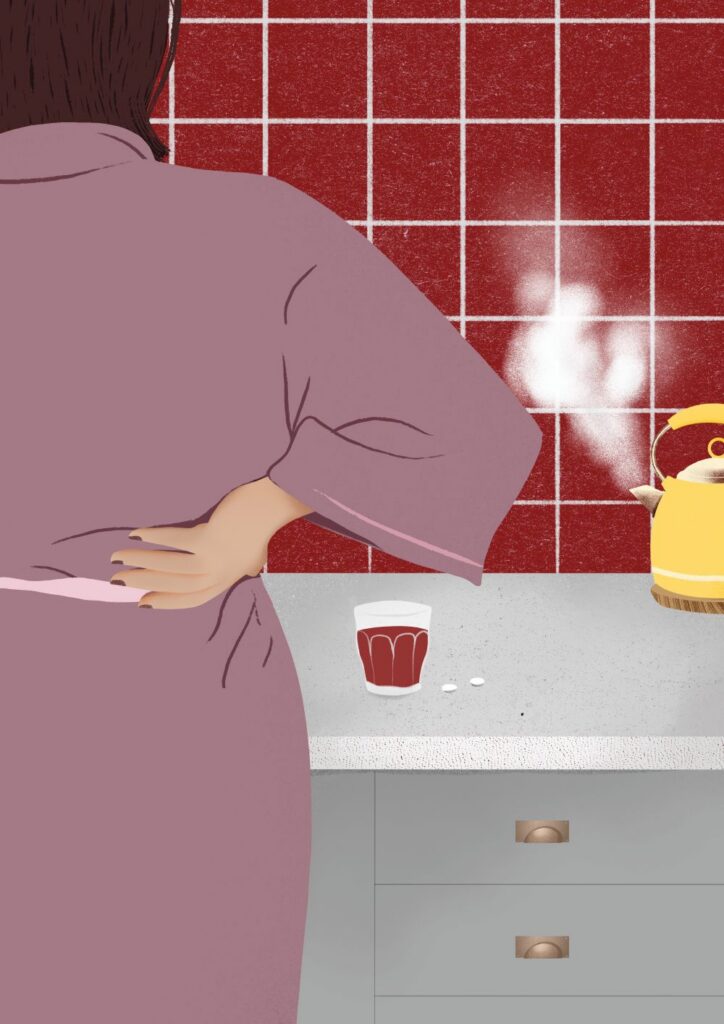
Eventually, the woman was referred to a consultant urologist. Also a male doctor, she said not once did he suggest that her suffering could be a result of the menopause. The loss of oestrogen during menopause affects the tissues of the pelvic floor and undermines the skin’s natural barrier, making it easier for bacteria and pathogens to enter the body, including entering the urethra and travelling into the bladder. Finally getting answers after a long and arduous battle, it was a female nurse, a friend of a friend, who advised treating her infections with vaginal oestrogen. It was the first time the woman had heard anything about this during her year of agony.
For the full feature, including more on the above story and advice from Dr Nicola Cochrane of Blackrock Women’s Health Centre on how best to treat a UTI and common misconceptions, pick up the March|April issue of Irish Country Magazine.
Find your nearest stockist here or sign up for our subscription service here so you never miss an issue.