Award winning garden designer, Leonie Cornelius takes us on a trip to the most famous flower show on earth – the Chelsea Flower Show.
It’s been a few years since I was last at the Chelsea Flower Show and wow, it’s good to be back. It’s one of those breathtaking shows filled with spectacle, wonder and beauty and so many clever and incredible ideas.
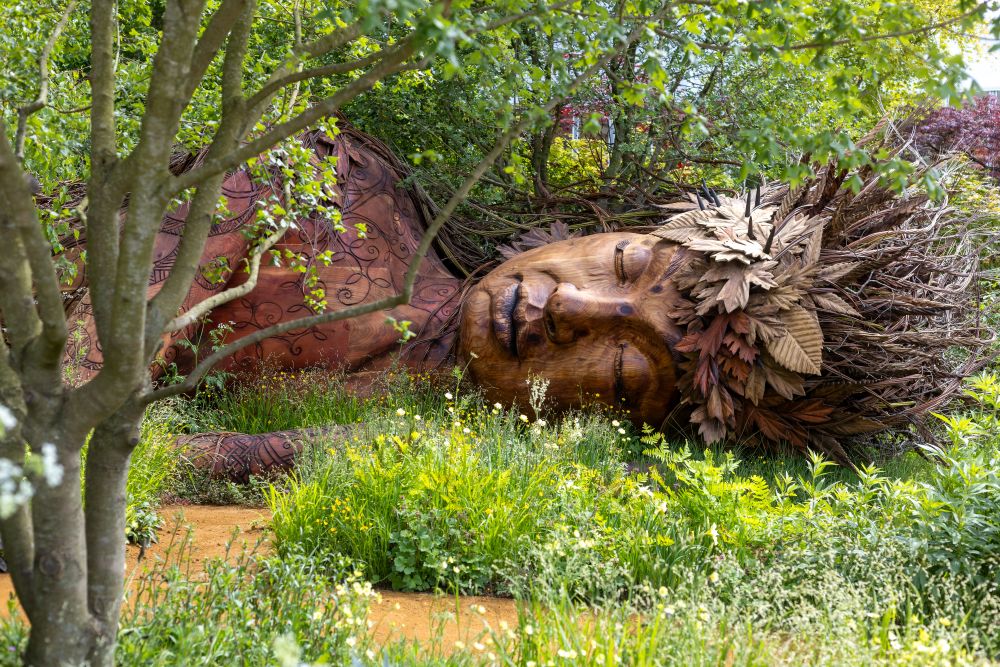
Sitting here in my hotel at my laptop I’m finding it hard to know where to start. Should I tell you about the incredible gigantic sculpture of Gaia resting like an illusion in the middle of a dancing meadow? Or the garden with Escher-esque water features which somehow defy gravity and yet remain utterly elegant and understated?
Chelsea 2026 was an interesting year with so many new things happening. Having lost its main sponsor – The Newt in Somerset – the show had a slight question mark hanging over its head for a while, but thankfully Range Rover came on as headline sponsor and integrated beautifully into the overall feel. It is also the final year of the Project Giving Back initiative, which has funded over sixty Chelsea gardens since 2022 and sent each one to a community, hospital or school ground afterwards. It will definitely change things for Chelsea in the years to come.
In another year of firsts, AI made its debut at the show and the garden gnome ban was lifted to the delight of many – Brian May, Mary Berry and Cate Blanchett among those who decorated gnomes for auction in aid of the RHS Campaign for School Gardening.
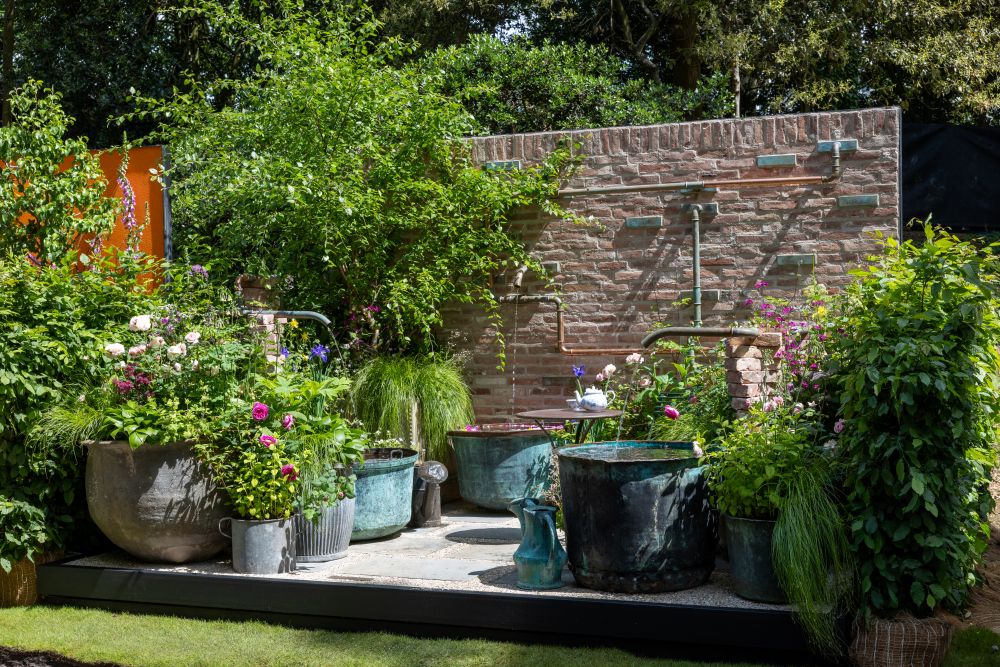
But let’s be honest. When it comes down to it, the one thing that makes the show truly what it is in all its glamour, are the show gardens.
These incredibly detailed, beautifully visioned spaces – designed by the biggest names in garden design, horticulture and gardening – are one of the most powerful
trend-setting opportunities in the gardening world all year. The design concepts, materiality and creative ideas on show at Chelsea set the conversation for the whole season.
After spending a whole day wandering the grounds of the Royal Hospital Chelsea I am still reeling from the beauty, ingenuity and ambition of it all. Here are the main themes I took from the show.
Mastery, restraint and the art of leaving things out
I kind of feel that the design mood at Chelsea 2026 has shifted back toward structure and slow craft – away from the wilder, more naturalistic aesthetic of recent years and toward gardens that are very deliberately, very carefully made. The gardens that stopped me most were not always the loudest ones. They were the ones where someone had thought deeply about what to leave out.
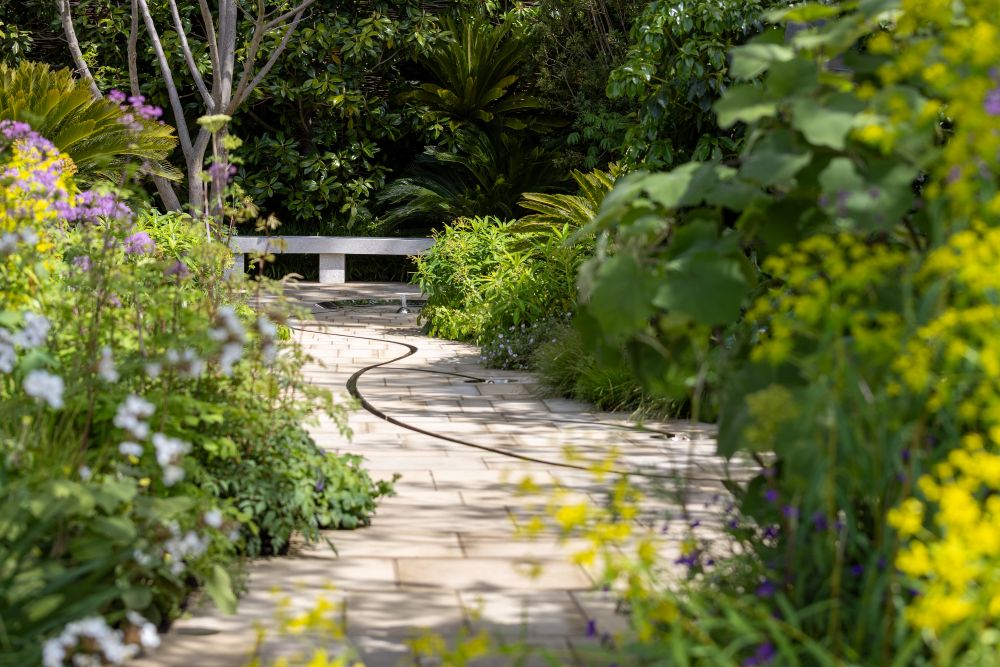
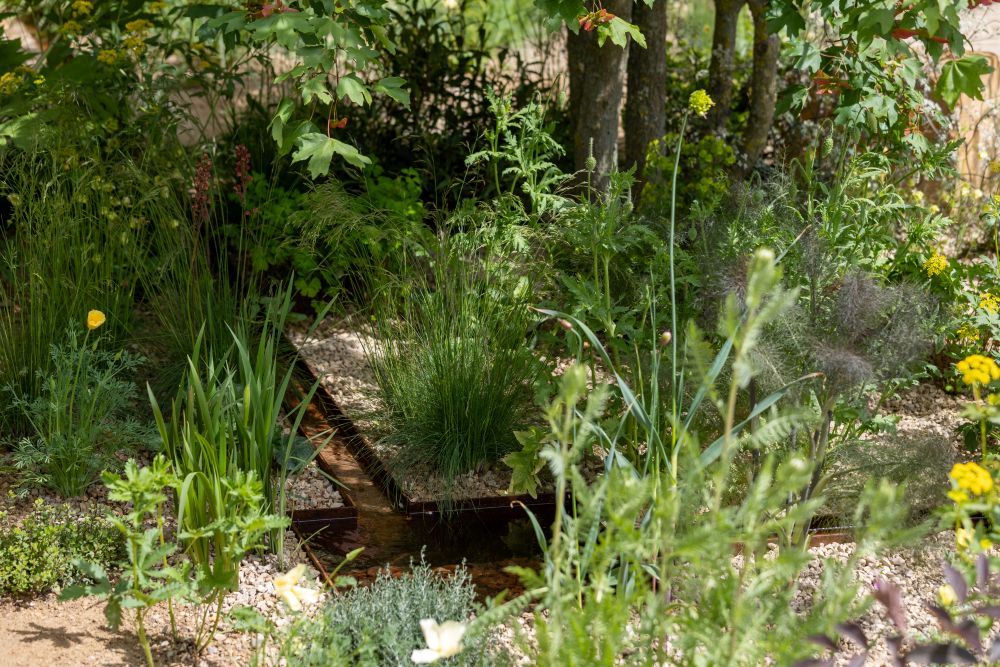
Tom Stuart-Smith’s Tate Britain garden: a preview of the future Clore Garden opening at the gallery in 2027, was a masterclass in that restraint. Yellow euphorbia meeting darker, deeper East Asian shade planting in a combination that felt bold and elegant – the word mastery was what came to mind for me straight away. A water feature inspired by the microscopic structure of fungal hyphae was running through bronze dishes and a Barbara Hepworth sculpture from Tate’s national collection at its heart (the first time a work from that collection has ever appeared at Chelsea) made the garden quiet, considered and extraordinarily beautiful.
Kazuyuki Ishihara’s Tokonoma garden gave the same quality of mastery in a completely different register. Flawless Japanese craft, the moss detailed with almost impossible precision, charcoal filtering the water throughout, every element was considered with nothing superfluous. Another garden which really jumped out at me for its bold simplicity was Angus Thompson’s Asthma + Lung UK Breathing Space garden, it had a real Mies van der Rohe quality. It had a very cool floating platform for yoga and Tai Chi, pine trees chosen for their natural antioxidant properties, and was guided by the Japanese principle of ‘yohaku no bi’, the beauty of empty space.
Wildness, sculpture and the edgelands
If some gardens this year showed the power of restraint, others made the opposite case with equal conviction. Sarah Eberle, the most decorated designer in Chelsea history, returning after retiring in 2022, brought something breathtaking. Her subject was the edgelands: the overlooked spaces on the urban fringe where nature does what it likes without our permission. The garden is anchored by her incredible take on Gaia, a monumental figure carved over several months by Welsh sculptor Chris Wood, seven metres high, made with chainsaws and hand tools and completed on site. It was pretty mind-blowing in scale and effect! Her willow hair, sculpted by Tom Hare, flows into a dry-stone wall. In the back part of the garden a reflection pool had bubbles rising at different points, causing the pond plants to move and drift. It was utterly hypnotic.
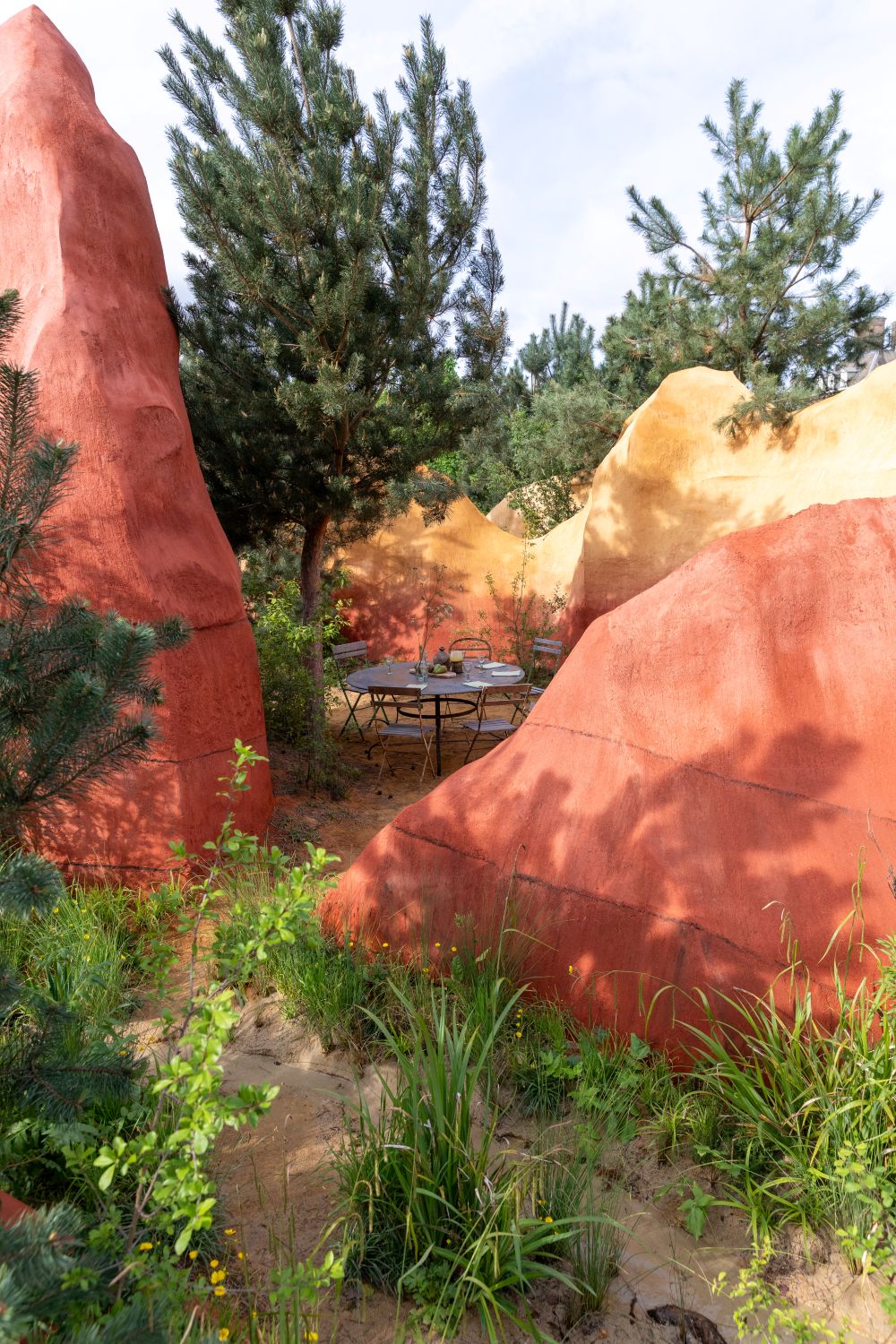
James Basson’s centrally placed feature garden carried that same quality of landscape ambition. Evoking the ochre mines of Roussillon in Provence: pine trees and towers of red sandstone, beautiful little vistas opening as you moved through the space, and the shadow-play when the sun came out was extraordinary throughout. This garden was one which thought about thriving ecosystems in disused, exhausted land. I absolutely loved his use of detailing with tiny Mediterranean planting details drawing you in to have a closer look.
For me I think this is one of the great take aways from Chelsea 2026: that wildness is not the opposite of design. It is one of its highest expressions. A fallen tree still supporting life. A corner left deliberately empty. Plants so delicate they draw you in for a closer look. That sort of permission to let something go and not fill it with superfluous fluff. Restraint- something every designer knows is not easy.
And interestingly, in a show full of handmade, human craft – willow sculptors, stonemasons, ceramicists working by hand – the Spacelift trade stand features gardens designed entirely by AI and raised a question worth sitting with – not whether it can be done, but what it will mean when spaces are created using artificial thought patterns and whether they have the same soul as those designed by truly talented designers. An interesting thought indeed.
When beauty and meaning become the same thing
Some of the most powerful gardens at the show were the ones carrying the most weight of purpose. Darren Hawkes’s Lady Garden Foundation ‘Silent No More’ garden was one of my absolute favourites of the entire show. Drawing its forms from the Spanish sculptor Eduardo Chillida, it placed elegant, womb-like structures through richly planted borders, water rills running between them, the planting shifting from soft pastels into deeper, more vibrant tones as you moved through the space. (This was the one I mentioned earlier when I said Escher-esque) Stunningly beautiful, I must have gone back five times to study it from different angles and in different light. It was built around a vital conversation: gynaecological health, the five cancers, the breaking of a silence that has gone on too long. It was a wonder to look at and one that will stay with me for a long time.
Patrick Clarke’s Children’s Society garden was stunning in a different way, beautifully detailed steel features giving the space a structural intelligence, and behind it the charity’s mission to reach young people before crisis hits. What they call a growing happiness recession. As the mother of a young man myself, I found this garden a very touching and emotional vision which was beautifully realised. The garden was co-designed with young people and will become the first outdoor wellbeing space at The Children’s Society’s youth club in Leighton Buzzard after the show. A really great garden with somewhere important to go.
Frances Tophill’s RHS and The King’s Foundation Curious Garden – one of the two central feature gardens, championed by King Charles III with Sir David Beckham and Alan Titchmarsh as ambassadors – felt vibrant, lush and genuinely curious. An oak museum of curiosities, edibles, dye plants, delphiniums grown at Wisley. Not a single piece of man-made material anywhere. The noise around it was considerable on press day especially and its really drew the crowds but when you looked closer it had this quiet yet joyful detailing which Frances is so known for. It was lovely.
Building differently – the quiet materials revolution
One of the most interesting design stories at Chelsea 2026 was not always immediately visible, but once you knew to look for it, it was everywhere. Multiple designers replaced traditional concrete with shell-based alternatives such as oyster crete which is made from waste oyster shells and featured at the gorgeous Addleshaw Goddard Flourish in the City garden (it was fabulous teamed with elegant copper) and beautiful clam crete made from mussel and cockle shells featured in the Eden Project’s Bring Me Sunshine garden and Charred timber at the Plant Heritage Missing Collector garden.
One of my favourite gardens was Baz Grainger’s Killik & Co garden, inspired by the Norfolk Broads and had rainwater harvesting at its heart. The materiality of it was exceptional with stunning architectural framed structure seemingly floating above the water. It also featured the most beautiful clay render which had straw in it and was genius in construction and detailing.
I think these ideas translate directly to how we need to think about our own spaces. What we build with matters – not as an abstract concern but as a design decision,
because natural and reclaimed materials bring a warmth and character that conventional alternatives can’t replicate. The Landform Consultants’ stand for Killik & Co felt like a space that had been there forever. That quality of timelessness is almost always the product of material honesty.
Small spaces, big ideas – and an Irish first
Some of the sharpest thinking at the show was happening in the smaller footprints. Rob Hardy’s Trussell’s Together garden – a stunning study in materiality, beautiful stone and All-green Irish stone paving, intersecting paths and gorgeous planting – carries particular significance for Irish readers. After the show it travels to Strabane in County Tyrone, to the Strabane Foodbank’s Community Garden. The first Chelsea garden ever to be relocated to Northern Ireland. The idea of being able to visit something which was shown here at Chelsea in Ireland is so wonderful.
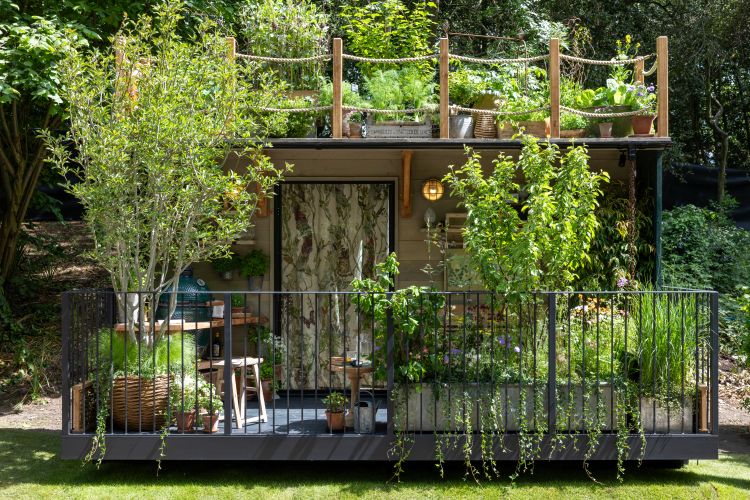
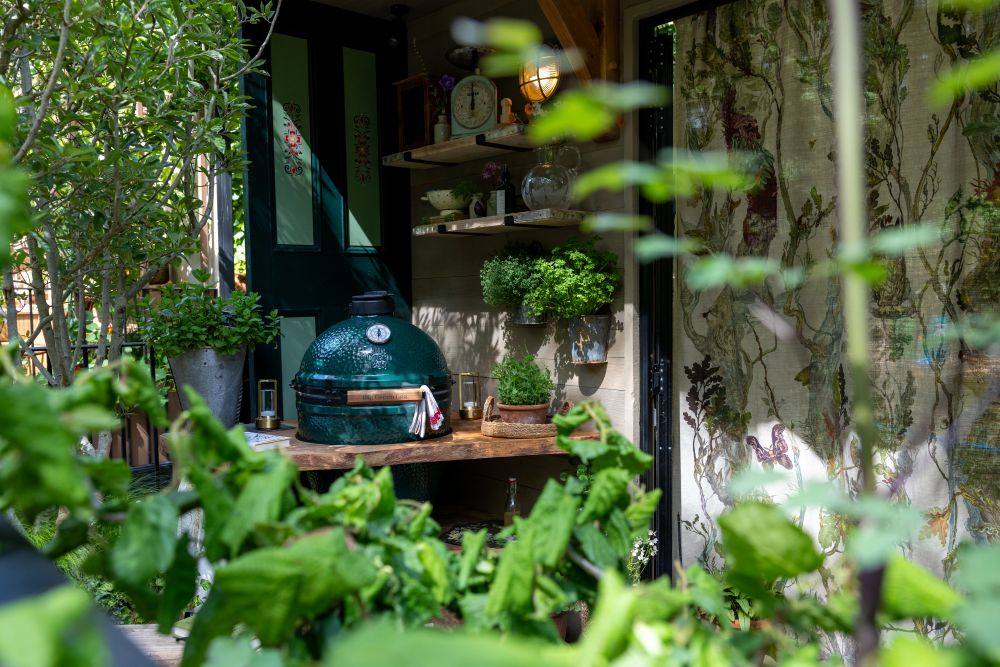
The balcony gardens were also exceptional this year. I loved Suzy Kennedy and Kate Henning’s Tales from the Riverbank – inspired by life on a boat, one of the designers lives on one – it felt enormous for its tiny dimensions. So cleverly detailed, edible plants throughout, a Green Egg, gorgeous in every corner, that you stopped noticing the scale and simply enjoyed being in it. Ollie Pike’s Whittard of Chelsea courtyard garden transformed a tiny space into genuine tranquillity through water alone – multiple rills pouring through, beautifully layered and calm. A reminder that water, even in the smallest quantity, changes everything.
Shared spaces- Who else is your garden for?
I think Melanie Hick’s Bat Conservation Trust Nocturnal Garden asked this question beautifully. Rich, dark planting anchoring the space, and then lighter planting – pale flowers, night-scented stock – chosen specifically for the moths and pollinating insects that arrive after you go inside. The boundary of the garden designed to dismantle into bat boxes on relocation. Tach Pollard’s sculpture ‘Dark Amber’ – a bat carved from reclaimed fallen cedar, over four metres high – watching over all of it with something folkloric and quietly extraordinary about it. The planting was just beautiful: rich dark tones and then that light, almost luminous planting for the night creatures. Beautifully brought to life.
Stands designed to perfection
Some of the stands for this year’s Chelsea Flower Show brands were designed so beautifully they were like show gardens in themselves. Watch out for the impeccably
elegant and wonderfully detailed Garden for a Range Rover by Alexandra Noble which features the most deliciously fine tuned paving. I also particularly loved the Killik Barn, which felt like it had always been there and the beautiful wild and colourful Weleda stand, which was humming with bees, brought a smile to my face.
What Chelsea 2026 leaves you with:
So now that the show is open to the public – and the medals have been awarded- I urge you to go and drink it in. Many of the designed gardens only become fully visible when you slow down and allow the space to work it’s wonder on you. Some of them even have an almost magical quality to reward you with an extra garden area which you might not have spotted the first time around. Tom Stuart-Smith and Sarah Eberle’s gardens do this so wonderfully. Slow down, linger, find a bench. See every garden in its entirety and enjoy!
Large Show garden medals
Gold
The Campaign to Proect Rural England Garden, ‘On the Edge’ – designed by Sarah Eberle
Killik & Co ‘A Seed in Time’ – designed by Baz Grainger
Tate Britain Garden – designed by Tom Stuart-Smith
The Lady Garden Foundation -‘Silent no More’ Garden – designed by Darren Hawkes
The Children’s Society Garden – designed by Patrick Clarke
Silver-gilt
Tokonoma Garden – Samumaya no Niwa – designed by Kazuyuki Ishihara
Eden Project ‘Bring me Sunshine’ – designed by Harry Holding and Alex Michaelis
Silver
The Asthma and Lung UK Breathing Space Garden – designed by Angus Thompson
Parkinson’s UK ‘A Garden for Every Parkinson’s Journey’ – designed by Arit Anderson
Small show garden medals
Gold
Trussell’s Together Garden – designed by Rob Hardy
Addleshaw Goddard ‘Flourish in the City’ – designed by Joe and Laura Carey
Silver-gilt
The Boodles Garden – designed by Catherine MacDonald
Journey Beyond the Tracks from Adelaide to Perth – designed by Max Parker-Smith
Leonie Cornelius is an award winning garden designer and best-selling author. Www.leoniecornelius.com.