
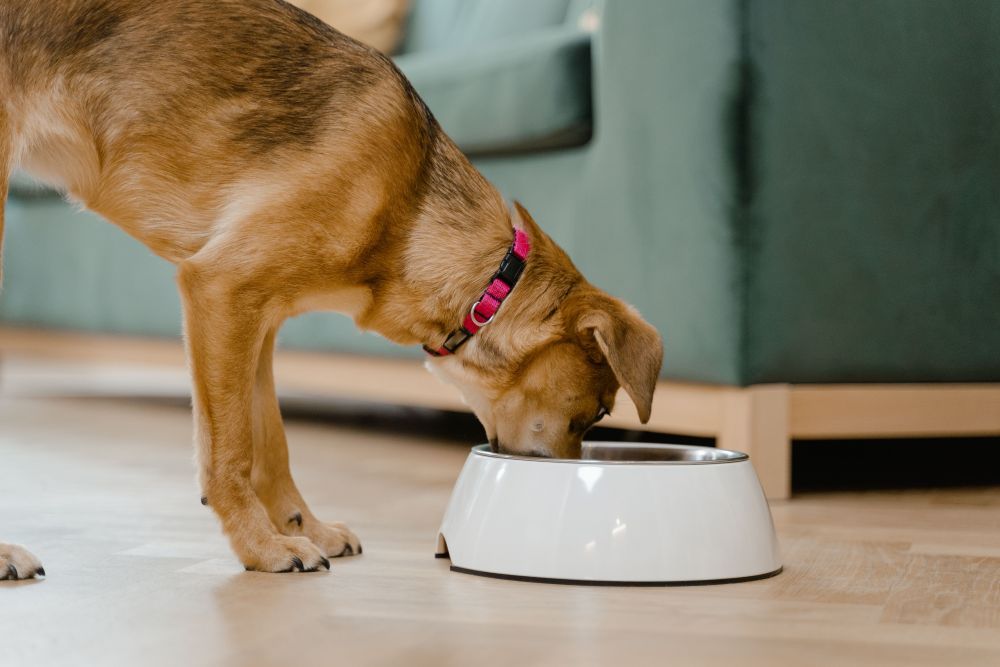
An expert shares their advice for dog owners dealing with fussy eating.
There is nothing quite as stressful as dealing with a dog or other pet that simply won’t eat. From panicking if something is really wrong to worrying that they’re not getting enough nutrition, it’s a lot to handle, particularly when your pet can’t actually tell you the problem.
Though it might seem isolating to experience it, new research by Bella+Duke found that Six in ten – 60% of Irish dog owners report at least one fussy eating behaviour, meaning it might be more common than you think.
Chatting with Dr Brendan Clarke, Vet and Chief Veterinary Advisor at Bella+Duke, he shares the various reasons why your dog might be picky with their food and how to manage the problem.
Why might a dog be a fussy eater, and why is fussy eating something to be concerned about / investigate?
Fussy eating usually has one of three causes: behaviour, boredom or health. Common behavioural causes are frequent treats or table scraps, free-feeding, changes in routine or stress, and dogs learning that refusing a meal gets something tastier. Boredom is also common, since many dogs eat the same food every day for years.
To tell them apart, look at the pattern. If your dog eats treats or leftovers but turns up their nose at meals, it’s more likely behaviour or boredom. If the change is sudden, if they’re refusing all food, or if you see weight loss, vomiting, diarrhea, lethargy, drooling, bad breath or difficulty chewing, it could be an underlying health issue, such as dental pain or illness. That’s the time to see your vet. If a dog hasn’t eaten for 24 to 48 hours, or is a puppy, small breed or already unwell, don’t wait.
What are your best tips for managing fussy eater
Recognise the different signs of fussy eating
Fussy eating isn’t always as obvious as a dog refusing its dinner, and there can be several behaviours to look out for. Dogs can communicate their preferences through how they approach mealtimes, and some may display more than one fussy eating habit.
New research commissioned by Bella+Duke among Irish dog owners explored eight different fussy eating behaviours, finding that six in ten (60%) reported at least one in their dogs. One in five said their dog regularly leaves meals unfinished, while one in twelve reported having to hand-feed their dog to encourage eating. It’s worth paying attention to feeding behaviours together, rather than in isolation, to better understand what your dog might be trying to tell you about their food and mealtime preferences.
Add variety to their bowls
Food can make a difference to mealtime enthusiasm. Food-motivated dogs often get very excited about fresh meals that smell and taste great, plus I think a key thing is variety. We wouldn’t get very enthusiastic about eating the same meal everyday so choosing a diet that allows variety keeps mealtimes exciting for them, as well as giving the benefit of a variety of nutrients.
Consider raw and fresh meals
Our recent research found that 64% of Irish dog owners feed their dogs dry food or kibble, compared with just 8% who currently feed commercially prepared raw food. For owners of fussy eaters, exploring fresh or raw might be worth considering.
Dogs descend from hunters and scavengers, and they respond to variety, much like us. Some science also shows that they naturally seek out fats and proteins as a primary source of energy, which is interesting given that many dogs are now fed a more carbohydrate-rich diet in the form of kibble.
But it doesn’t have to be all-or-nothing, especially not to begin with. Owners interested in trying raw feeding can introduce complete and balanced raw meals gradually over 7–10 days, allowing their dogs time to adjust.
Also seek out advice from your veterinarian before switching your dog’s diet.