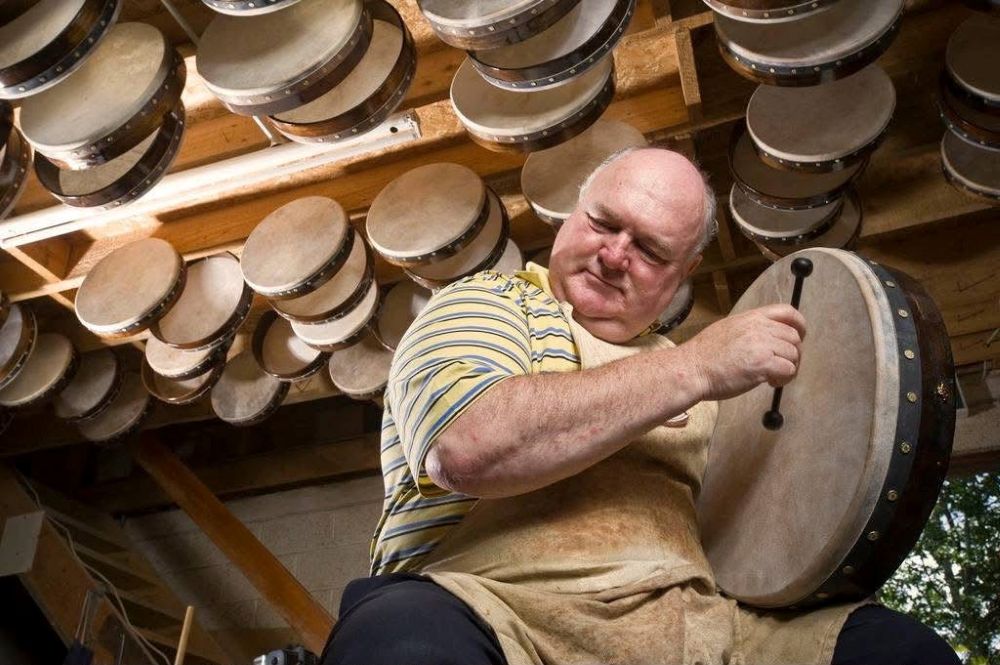
Malachy Kearns, also known as Malachy Bodhrán, has spent more than 50 years handcrafting Ireland’s oldest musical instrument using traditional techniques.
Based in Roundstone, Co. Galway, he has handmade every bodhrán used in Riverdance for the past 25 years and remains one of Ireland’s most respected traditional craftspeople. We catch up with him where he chats to us about the pride he has for his craft and the unique role the Bodhrán plays in Irish heritage.
Tell us about what you do and how you got into the craft of bodhrán making.
We make bodhráns here in Connemara. A bodhrán is typically 18, 16, or 14 inches in diameter, made with goatskin and usually has a rim depth of around three, four, or five inches.
What makes our bodhráns special is that we don’t use any chemicals when dehairing and defleshing the skin. As a result, the skin retains greater flexibility and bounce-back, which is very important because one hand is placed behind the skin, manipulating the tone, while the other hand plays the beater, or stick. Having a high-quality skin is essential for this playing technique, which is a uniquely Irish and highly skilled way of playing the bodhrán.
Today, this technique is often regarded as one of the most innovative developments in the world of hand percussion.
As for how I started making bodhráns. I lived beside Peadar Merciar, one of the founders of The Chieftains famous folk group. At the time, in the late 1960s and 1970s, bodhráns were often simply tapped on stage. Peadar went on to develop incredibly clever and controlled rhythms and playing techniques, helping to popularise the instrument and transform how it was played.
I was fortunate to be around him. He was a very kind and spiritual man. He knew that I wanted to live in the countryside by the sea and have a family-oriented tourism or craft business, similar to the kind of work I had done in my youth in Sligo. He guided and encouraged me greatly.
Probably the bodhrán I am most proud of was one I made for Peadar after I had been making them for about two years. He later showed me that very bodhrán being played at the Royal Albert Hall in London during a performance by The Chieftains.
The players went into solo, a fiddle solo, a whistle solo, and so on. Then came the bodhrán. Peadar pointed out that when the bodhrán solo began, the audience fell completely still for three or four seconds.
When a bodhrán is made and played properly, it creates an energy and a sound that hits you more in the gut than in the head or even the heart. You’re not analysing it, you are feeling it. People become still because they are experiencing it so deeply.
That was a wonderful lesson to learn, and I was very fortunate to have a mentor like Peadar.
What bodhrán creation are you the most proud of? Or means the most to you.
Another bodhrán I made was for a young boy who was around 10 years old at the time. He was on the spectrum and had a remarkable sense of rhythm and energy. He took up the bodhrán and has since gone on to become a master player.
Seeing him develop his talent and go on to win competitions has been incredibly rewarding. It truly lifts my soul. I love seeing that kind of success in a young person and watching them grow in confidence through music.
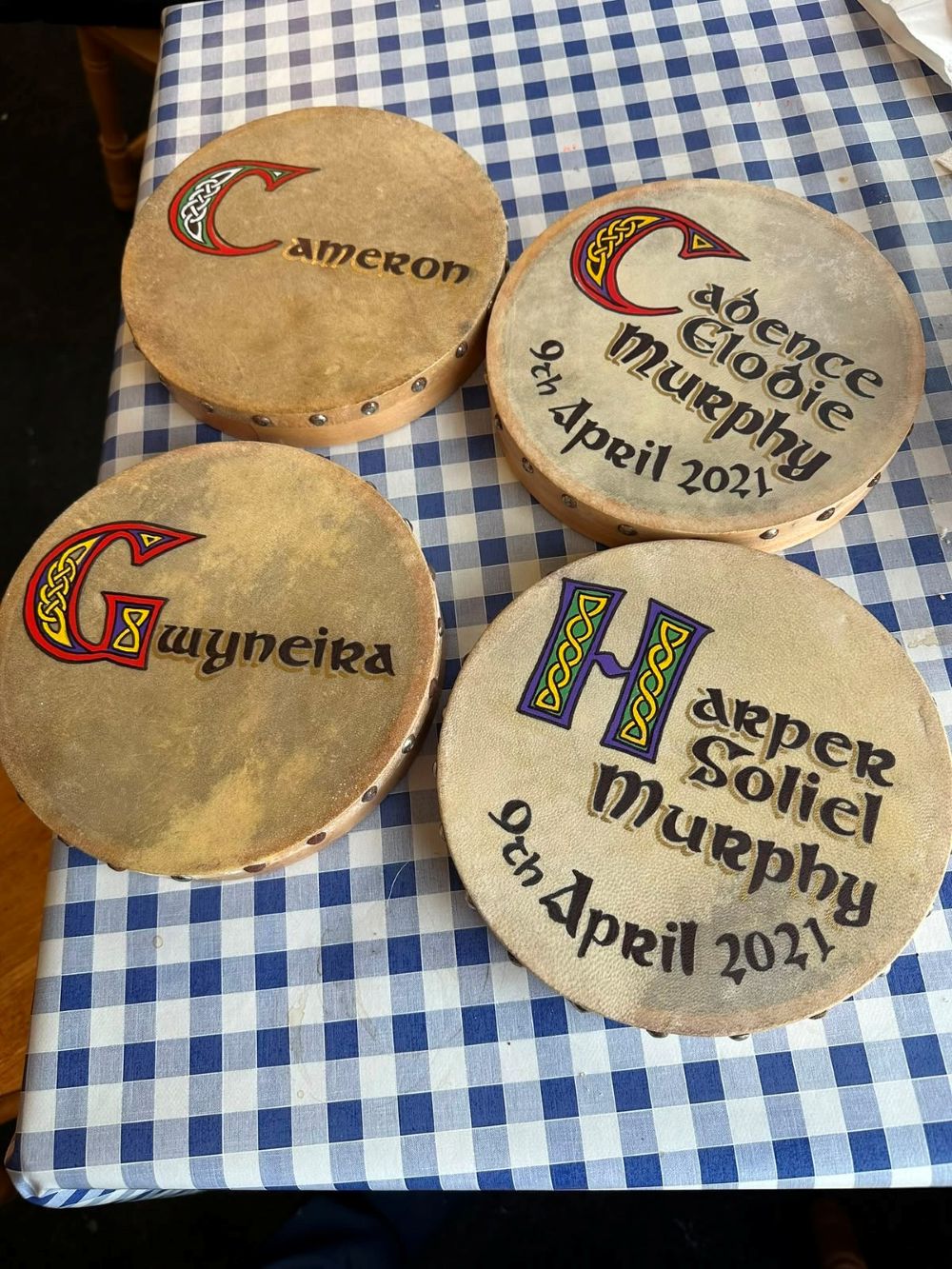
What’s one thing people might not know about your craft but should?
We don’t use any chemical to de-hair and de-flesh the goatskin for the bodhrán. This is very important as it leaves the skin at its full natural power and it leaves it more flexible and a deeper, haunting sound.
What does a typical day in your workshop look like?
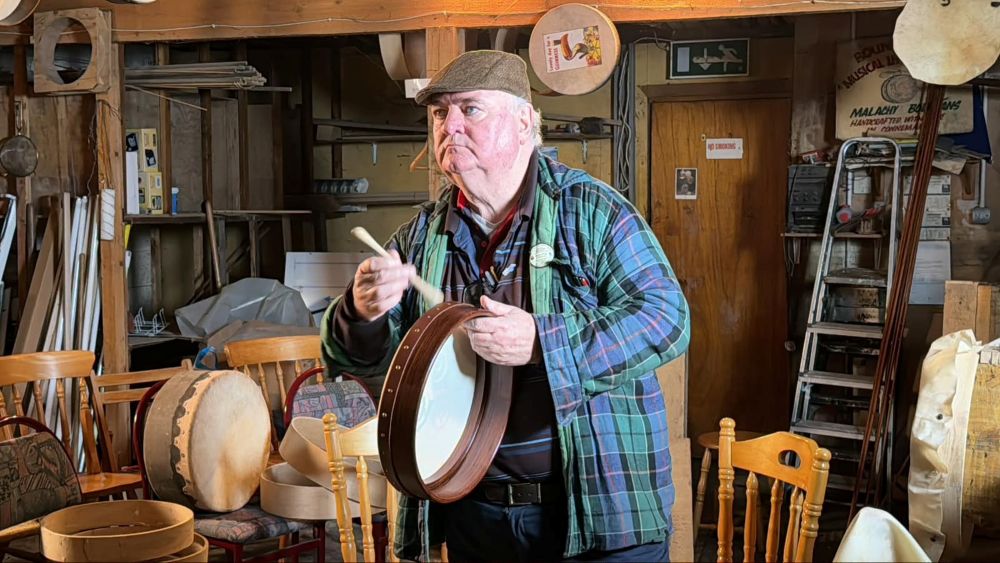
A typical day at my shop involves welcoming pre-booked craft and tour groups for talks about the bodhrán. We share the history of the instrument, demonstrate its unique playing techniques, answer questions, and tell stories about its place in Irish culture and tradition. It’s something I really enjoy. The Irish people are fascinated by the bodhrán and the rich heritage behind it. The Irish have a special affection for the bodhrán because, in many ways, it has become a symbol of resilience, identity, and cultural pride. It holds a unique place in the Irish psyche and remains an important part of our musical and cultural traditions.
After more than 50 years in this business, what continues to motivate you?
Of course, in the workshop, we are making bodhráns all day long, surrounded by the wonderful smells of goatskin, varnish, and perhaps even a little whiskey as well. We often keep a very good whiskey for VIP guests and special visitors.
I love chatting with people who come through the door. It is a great privilege to meet such gracious, kind, and genuine people every day, and that is what continues to motivate me. I never really think about retirement because this is more than just work, it is a way of life and a lifestyle that I truly love.
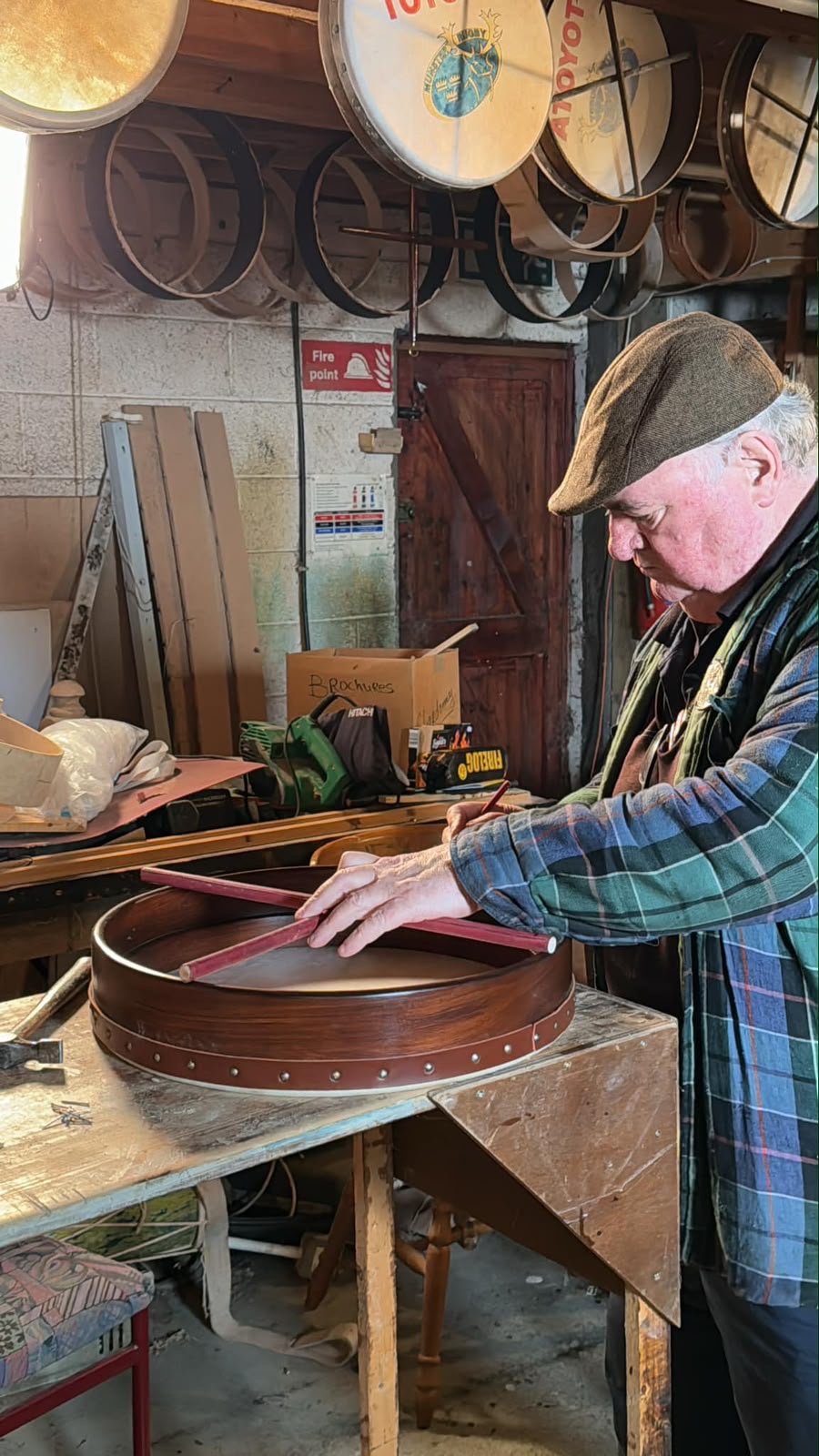
The workshop is tucked away at the end of a lane in the west of Ireland, a little piece of paradise. It was once an old Franciscan monastery, and they always knew how to choose the best locations. We are surrounded by beautiful scenery, shelter, and incredible views, which makes it a very special place to create and welcome people.
What advice would you give to others hoping to learn a heritage craft?
When it comes to advice for a young person starting out, I would say: learn to take everything one day at a time. Stay focused on the present moment and do what you can today. Whatever is right in front of you and needs to be done, take care of it and deal with it. That gentle, steady energy creates its own momentum and naturally brings you to a good place.
Taking things one day at a time is always the secret.
If you’re interested in Irish crafts like this, check out August Craft Month taking place around the country this August where you can take part in workshops, exhibitions, and demonstrations.
Read next: How one Cork woman is helping to care for 1,500 donkeys across Ireland.