In our digital series ‘the art of writing’ we chat with talented Irish writers to celebrate the artistry of writing in all its forms.
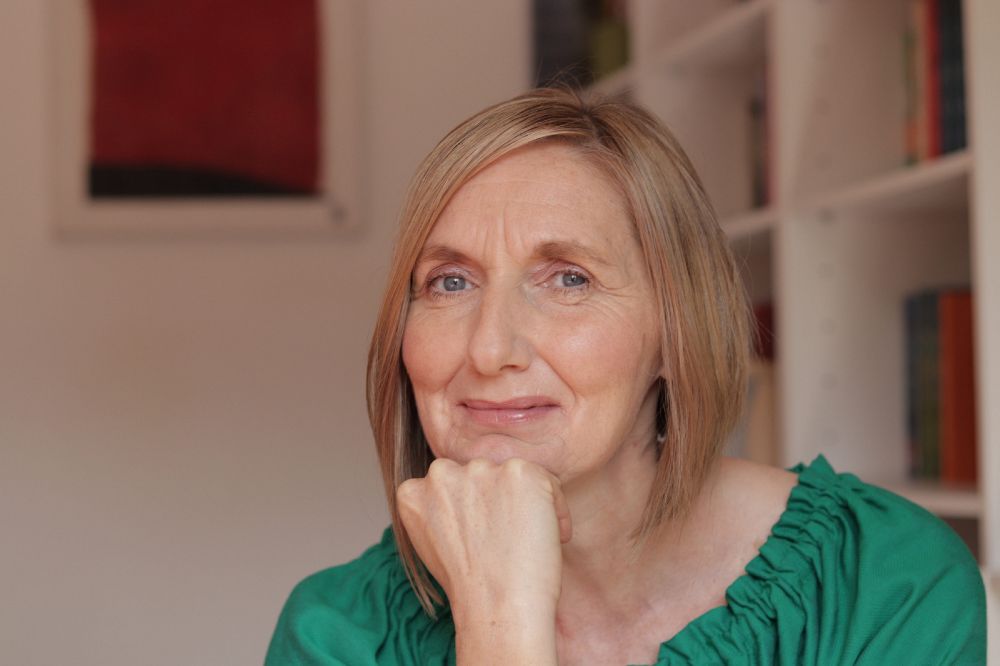
Anne Griffin is an award winning novelist and short story writer from Dublin. She has penned three books: When All Is Said, Listening Still and The Island of Longing. Her debut novel, When All Is Said made a big splash in the Irish literary scene, earning her the Newcomer of the Year award at the 2019 Irish Book Awards. Chatting to us about how she got into writing at the age of 44, Anne is working on her next novel and shares her writing process for that and the ups and downs that come with being a writer.
Tell us about your writing.
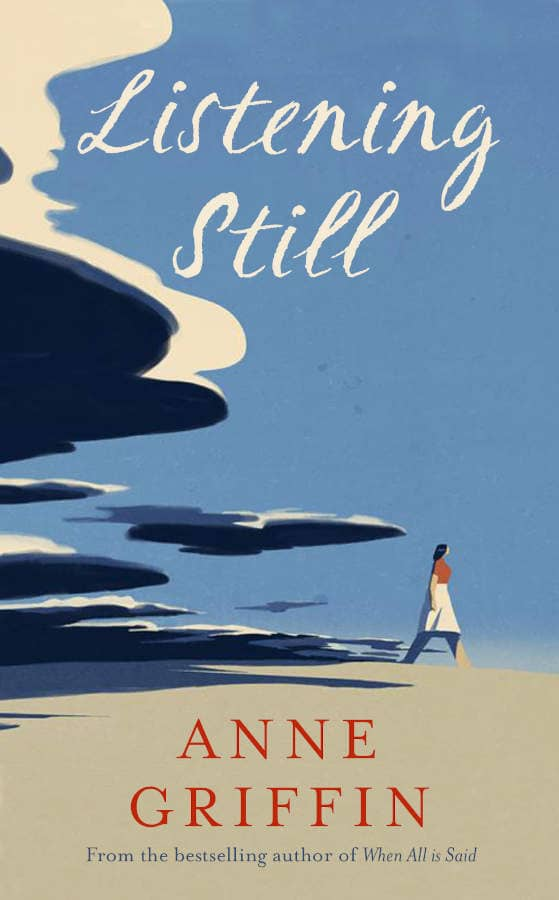
I am the author of three novels: When All Is Said, Listening Still and The Island of Longing. All set in Ireland straddling the middle ground between literary and commercial fiction. My settings are predominately rural, despite being brought up in Dublin city. My heart and mind, have always, I think, belonged to the land and trees and rain. My work has been published in twenty-three languages.
Have you always known you wanted to write?
To read, yes, to write, no. I am a late bloomer, coming to writing at 44. It was a surprise and joy and lead me to do an MA in Creative Writing in UCD. When All Is Said, my first novel was subsequently bought at auction and won an Irish Book Award. Honestly, I never knew what I wanted to be, becoming a writer is a great gift, but I like that life has allowed me different pathways. I’ve been accountant, community development worker, bookseller and now writer. I am all of these things still, in my head and heart, alongside mother, reader, fruit and vegetable grower and TV addict.
Talk us through your writing process
In setting out to write a new novel, I often start with a sentence, a word, a phrase, an idea. Something that has popped into my head quite by surprise and off I go. It’s kind of interesting to see where it brings me. With When All Is Said, I had the ending, a successful farmer facing a tough decision, and so began writing to that. With Listening Still, I wanted to explore life in an undertakers, the characters grew as I wrote. With the Island of Longing, it was an area of interest that drove me, the missing people of Ireland, and a love of Cape Clear Island off Cork’s coast, although I gave it a different name, on which the book is set. Once I have a definite thread, I’m happy to let the story come in its own meandering way. Naturally, this leads to a lot of restructuring work at the end. It suits me, though.
How long I write for at a time is based on how much is in the tank. If I’m tired, I could give up within the hour and re-read what I’ve already done, perhaps do a bit of thinking about the next scene. It’s a long process. The first draft of the novel I’m writing now, has been going for a year with a small glimpse of the end in sight. It will take another while, months and months before it will feel in any way presentable to a trusted reader who will tell me what isn’t working, and off I go again, draft number two. When will it get to my editor? Who knows. Mostly, I write in the mornings, when I’m fresh. When the energy levels are at their best.
Describe your writing space.
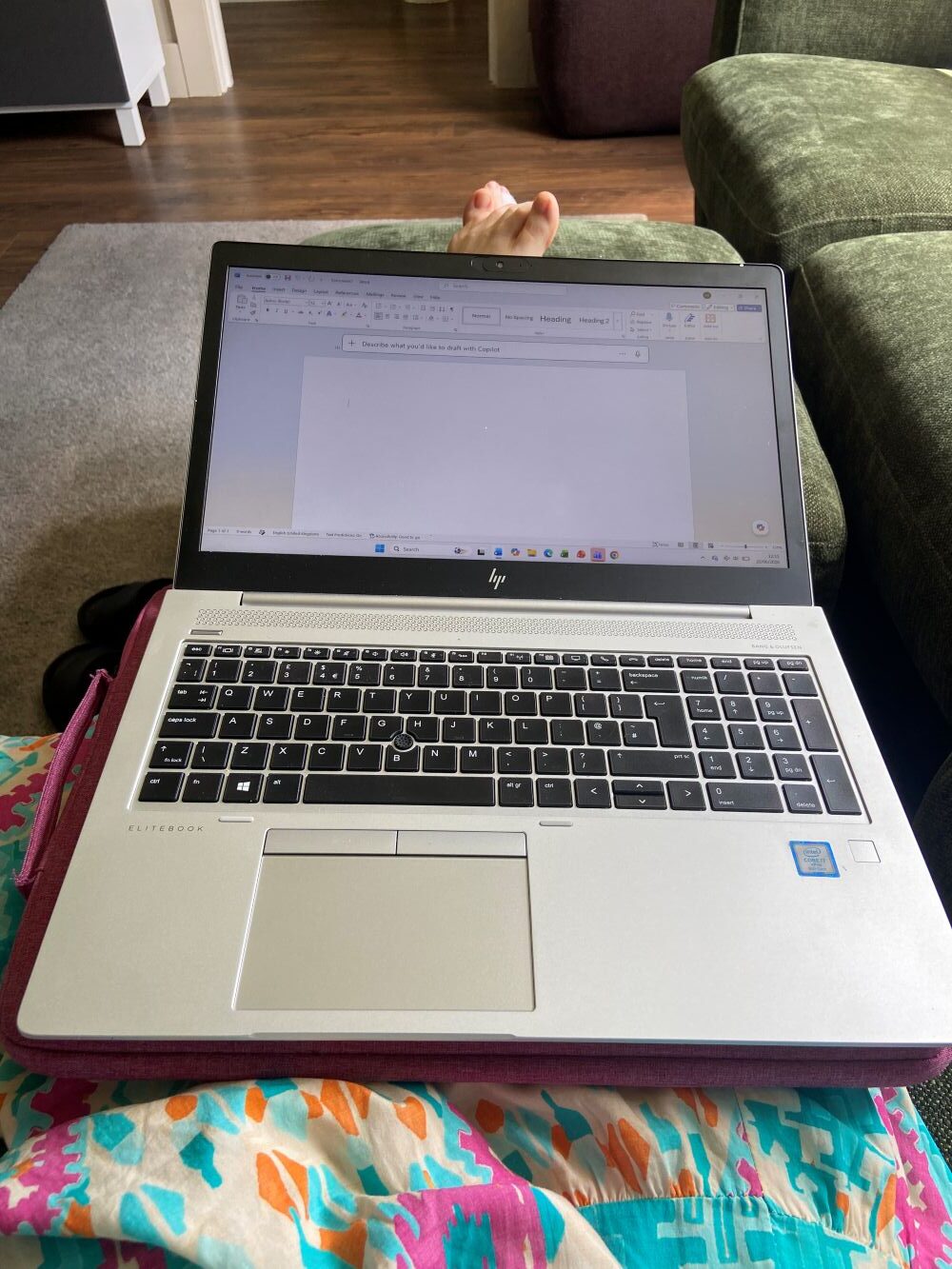
It could be anywhere. I have no set space. Wherever I am, that’ll do. A desk is good, if I can get one, but more often than not, I sit on my bed and type away. An injury to my shoulder a few years ago, put paid to that for a while, so I had to resort to chair and table. I do have a desk if I need it but me and the laptop and my notebook (one notebook per book) and headphones (not to play music, it simply dulls the sharpness of any noise around me) and I can write anywhere. Right now, I’m sitting on my couch writing this.
What is a piece of writing you wish you wrote and why?
Not so much a piece of writing as a healthy jealousy of some of my favourite writers. Anne Tyler, Mary Lawson and Richard Russo have been my go-tos for years. A writer new to me is Mary Beth Keane. Her latest, Whale Harbour, is coming in January 2027 and is a keeper. Same too with Beartooth by Callan Wink that came out in 2025. These writers write life exquisitely, capturing what it is to be the flawed humans we are, and it gets me every time. Doesn’t have to be a big drama piece, although a well written plot is an essential.
Anne Tylers’s Digging to America or Mary Lawson’s Crow Lake or indeed Maggie O’Farrell’s Instructions for a Heatwave just spell out life to me and make me deeply envious of their brilliance at capturing what goes in our head and hearts. They add a bit of humour too, which I love. I don’t need amazing sentences, (although when they come, is there anything better?) Humanity reflected back on the page will satisfy me every time. Simple yet profound.
What are your thoughts on AI and writers using it to assist their own writing?
Transparency. That’s my number one thought. If a book, play, script is going to be written by AI then AI needs to sign it and let us know, no pretending allowed. This gives the reader the power. It’s up to the reader who or what they want to read. In the same way, if a writer uses AI to enhance large swathes of their writing then it needs to be stated. However, if I am using AI to check my spelling, for example, or looking for a synonym as I have done with the internet and dictionaries for years and years, then that’s fine. Knowledge is power, so let’s be honest with the readers if we are using something else and stop pretending it’s our own talent.
Finally, what tips do you have for aspiring writers?
Read, read and read. Learn from the greats and the not so greats. Writing is amazing but can be utterly heartbreaking too. I’m coming out of a couple of years of that. So, ride the wave when it is there, when those words are flying onto the page and you believe yourself a genius, you possibly are. When the down times come, and they may come in clumps of days, weeks, years, you must still write. Write your way out of it. Write as often as you can, every day (even fifteen minutes) if the day job and home life allows. Put everything down on the page, fifty per-cent may be awful and will, more than likely, be binned, but there is another fifty-per cent only waiting to replace it, some of it is bound to be the good stuff.
Find people you trust to be your readers – others who also write (not your best friend or partner, unless of course they happen to be Anne Enright). What you’re looking for is honesty, someone who will tell you when something you have written is good and when something isn’t. You’ll find them in creative writing courses in the Irish Writers’ Centre or in the local library or the local writers’ group. Maybe even aspire to a college course in ATU Sligo, University of Limerick, UCD, TCD, DCU or NUI Maynooth to name a small few that offer wonderful courses with excellent teachers. Most of all enjoy it, even when it’s tough. Do it. Love it and at times hate it, but just do it anyway.
Read next: The art of writing: Patrick Freyne shares how he makes time for writing amidst a busy life.