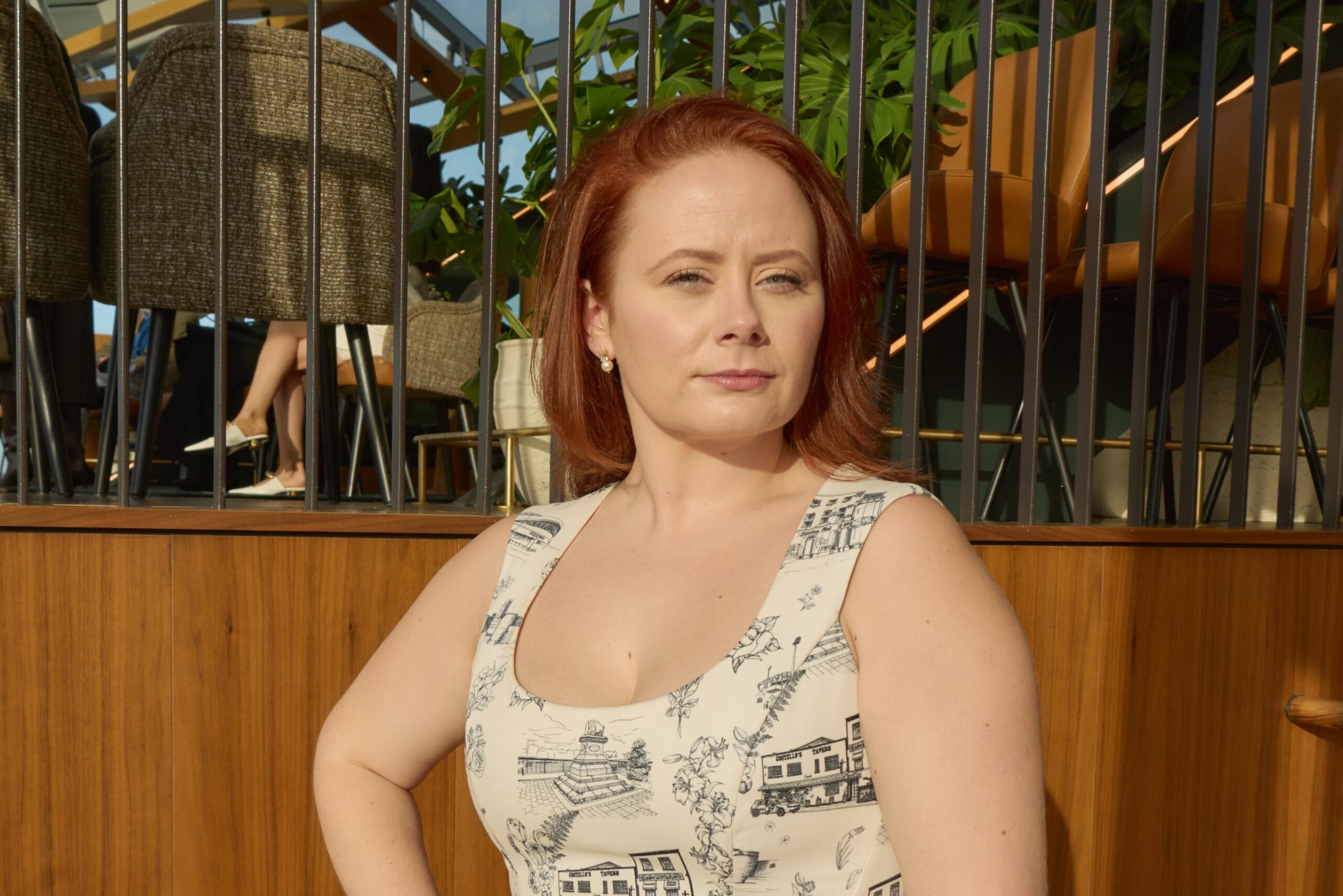
A fashion and textile designer based in Co Limerick, you may recognise Mary O’Sullivan as the woman behind some of the fabulous designs showcased at Ireland Fashion Week this year
Inspired by Irish creativity, heritage and storytelling through fashion, Mary O’Sullivan was one of ten talented designers to take part in the Irish Roots fashion show at St Helens Hotel in Dublin. A graduate of Limerick School of Art & Design, her eponymous label focuses on small-batch productions made in Ireland. This October, she launched her first-ever ready-to-wear collection – available for pre-order now.
We caught up with Mary to talk about her journey thus far.
You’ve spoken about being inspired by both your mother, Ann, and your daughter Lily. What do you think they taught you about the kind of designer you wanted to become?
This is such a brilliant question. I think the two of them have shaped me in very different, but equally important ways. From my mum, I’ve learned resilience. I’m the youngest of six, and now that I’m a parent myself, I have a completely different appreciation for what it took to raise us, particularly through the 2008 recession and all the other challenges life brings. She showed me what it means to keep going, even when things are difficult. When I was heavily pregnant with Lily, I remember asking Mum what would happen if I went into labour before my first-year exams were finished. Her response was that I could leave the hospital for a few hours, sit my exam and go back to the maternity ward afterwards! That was her attitude: we’d figure it out, and we’d keep going. I think that determination has stayed with me throughout my career.
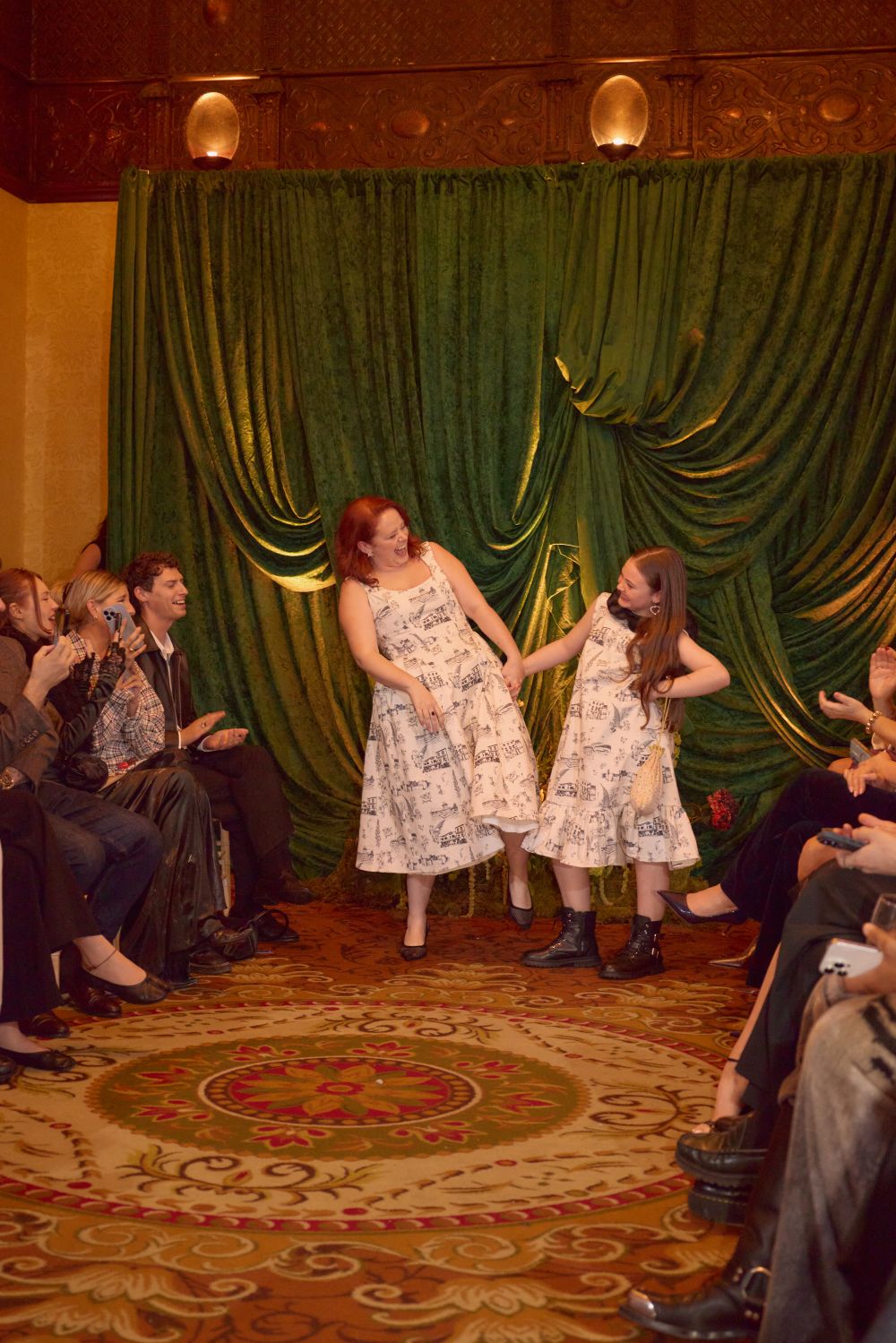
Lily has taught me discipline, perspective and joy. Every decision I make in life and business is filtered through its impact on her. She’s my North Star. I ask myself whether something will genuinely add to our lives or whether it’ll take away from the time and energy I have to be the mum I want to be. Being a mother has made me much more intentional about my work. My time and resources are limited, so I’ve learned to be strategic about where I put my energy and what opportunities I pursue. But Lily has also reminded me that creativity doesn’t always have to be complicated. There’s as much joy in being present and playing a game together as there is in creating a new piece of artwork.
I think Mum taught me to persevere, and Lily has taught me what I’m persevering for. Both have shaped not only the person I am, but the designer I’m becoming.
As the brand has grown this year, with the addition of your silk scarf and your Costello’s Tavern T-shirt, how do you decide which Irish places, memories or traditions earn a place in a print? Is there a particular story you want to tell?
My work is very heart-led, and I think that comes from the fact that so much of it is rooted in my own memories, experiences and connection to place. I’m interested in the stories that make somewhere feel like home, whether that’s a familiar landmark, a local business, a childhood memory or a place that holds meaning for a particular community.
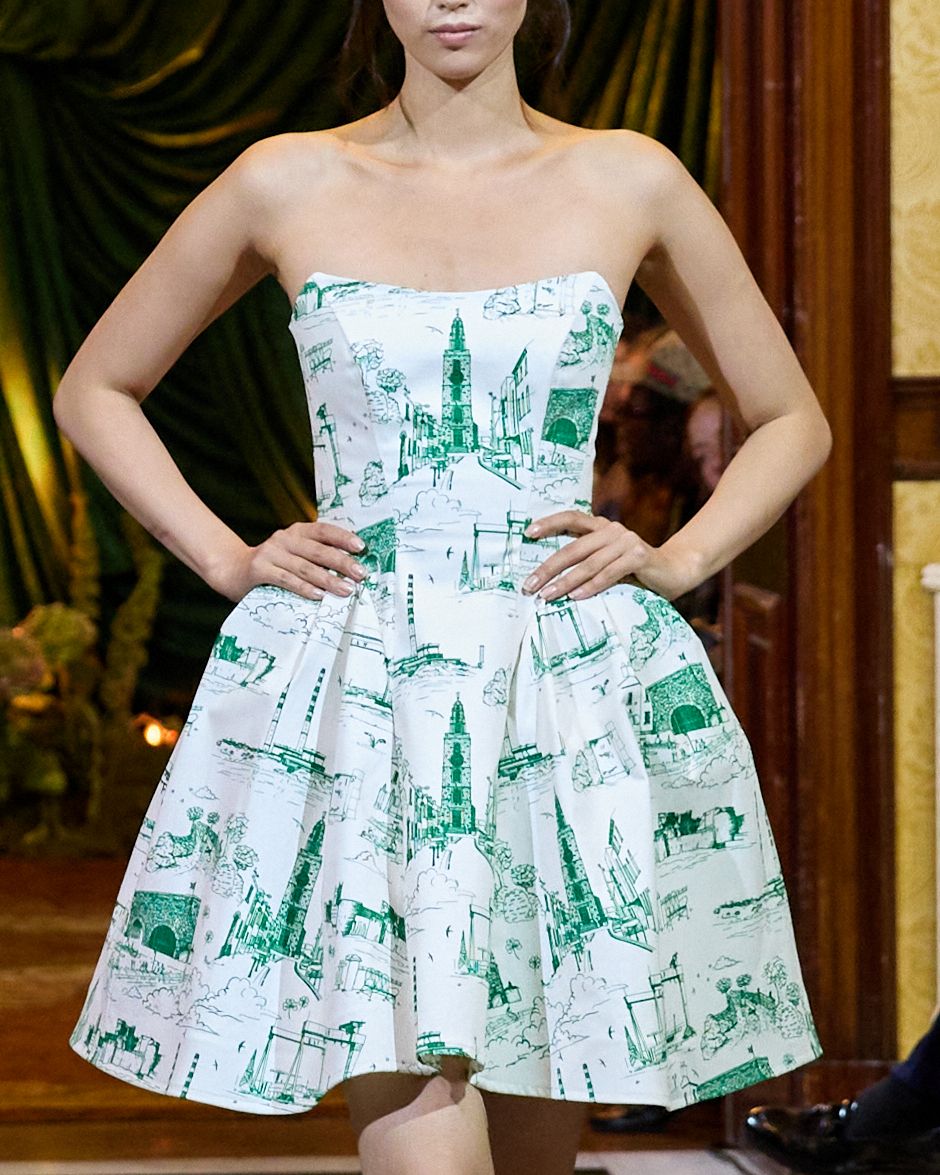
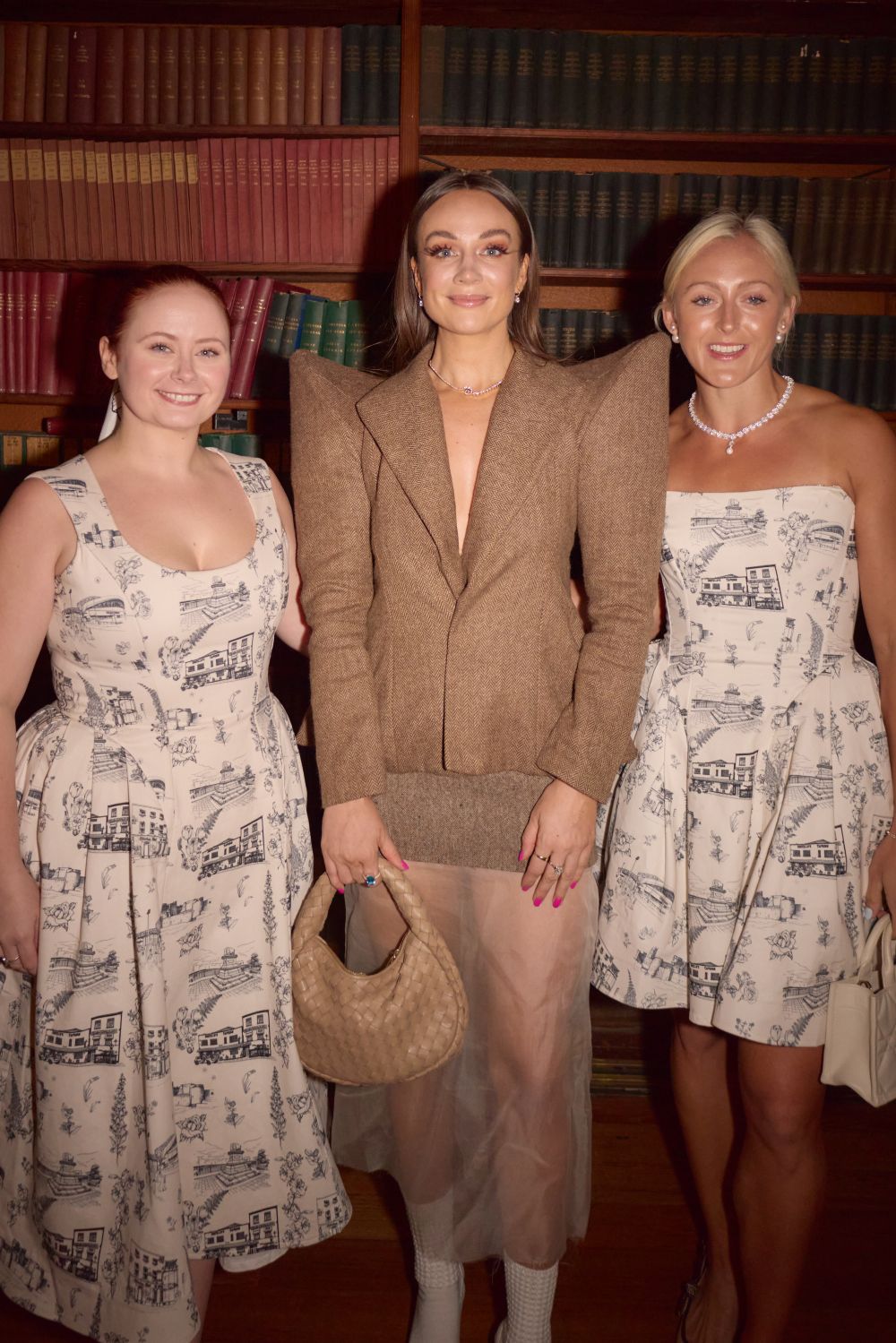
With the Limerick Toile de Jouy, for example, I wanted to take a traditional French print and reinterpret it through an Irish lens. The landmarks, buildings and little details are familiar to people who know Limerick, but they’re also an invitation for people to discover the city through a different perspective. I love the idea that a print can be beautiful in its own right, but can also hold a much deeper meaning for the person wearing it.
As the brand has grown, I’ve also been thinking about how I can make that connection accessible to more people. I knew I couldn’t create a bespoke garment for everyone who wanted a piece of the Limerick Toile, so the silk scarves were a natural next step. They allow people to carry a little piece of home with them, wherever they go. The ready-to-wear collection I launched alongside Ireland Fashion Week makes my dresses and corsets available for the first time and builds on that idea, bringing the artwork into pieces that people can wear and make their own.
The Costello’s Tavern collaboration came from a slightly different place. It was about celebrating a much-loved Limerick institution and creating something that my friends, the local community and I could all feel connected to. I love collaborating with other creatives and businesses, particularly when there’s a shared sense of identity and pride in what we’re creating. Ultimately, I want people to feel something when they see my work. Joy is always the goal, but so is connection. If someone sees a detail in a print and says, “I remember that”, or “That’s my home” and feels incredible in the piece they are wearing, then I’ve done what I set out to do.
Last year you shared the Roots stage at Slane Castle with storied houses like Magee 1866, Avoca and Jack Murphy. What changed for the brand after that first Ireland Fashion Week show, and what did you bring to the runway this year?
That first show was a real turning point for me. It gave me the confidence to recognise the value of what I was creating and to take my work, and myself as a designer, more seriously. At that stage, I was developing and making pieces in the spare room at home on my own. To see my work presented alongside established Irish heritage brands such as Magee 1866, Avoca and Jack Murphy was incredibly affirming. These are names with a significant history in Irish design, and it showed me that there was a place for my own interpretation of Irish heritage within that wider story.
It also helped me realise that what I was creating wasn’t just something I personally loved. There was a genuine audience for it, and people wanted to wear it. That gave me the confidence to think beyond individual bespoke pieces and consider how I could develop the brand into something with a wider reach.
This year, I brought that vision further with my Cities of Ireland Toile de Jouy collection. I’ve taken the traditional Toile de Jouy style and created an original print celebrating five Irish cities (Limerick, Cork, Belfast, Galway and Dublin), incorporating landmarks and details that reflect their individual identities and landmarks that the people of those cities hold dear. For me, it’s about demonstrating that heritage doesn’t have to remain in the past. We can respect traditional techniques, artistic styles and our cultural history while interpreting them in a way that feels contemporary and relevant today. I want to contribute to the next chapter of Irish design, creating work that honours where we come from while showing people something new.
What does a real week look like as a mother juggling family and business life?
The beauty, and sometimes the challenge, of my work is that no two weeks are the same. One week I could be developing an original artwork, such as my Barringtons piece for Bon Secours, and the next I could be pattern drafting, sewing and fitting a bespoke garment for a client.
In the lead-up to Ireland Fashion Week, there was a huge amount happening behind the scenes. Alongside finishing the runway looks, I worked with the Irish Roots stylist, Anne O’Shea, and show coordinator, Anne Forde, to finalise details and liaise with VIP guests wearing my designs. This year, I’ve also been preparing the ready-to-wear preorder launch. People often see the finished collection or the runway moment, but there’s an enormous amount of work that goes into getting there. I’m developing the products, preparing the website, planning newsletters and social media campaigns, and managing the orders that come through the business. As an independent designer, I’m involved in every single part of that process.
One thing I’ve learned about balancing motherhood and a business is that you can’t do everything all at once, and I’ve become much more comfortable with that. For a long time, I put enormous pressure on myself to be everything to everyone. I wanted to be present for my friends and family, cook every meal from scratch and give every aspect of my business my full attention. The reality is that there are seasons in life and business. Sometimes I’m completely immersed in a project for weeks, and other things take a back seat. What matters is that at the end of the day, when Lily is home from school, I make time to be present with her. I’ve learned that balance isn’t necessarily about giving everything equal attention every day. It’s about understanding what needs you most at a particular time and being comfortable with the give and take, and ultimately the different trade-offs that that brings.
Lily has absolutely left her mark on my designs. I show her my drawings and finished pieces and ask what she thinks or what she’d do differently. She’s fantastically honest! In my Limerick Toile de Jouy, I incorporated Irish native flowers and flowers inspired by the People’s Park, including a collection of lilies as a personal tribute to her. It’s a detail that means a great deal to me, even if someone looking at the print might not realise the story behind it.
Of everything you’ve designed so far, which piece or print holds the most meaning for you?
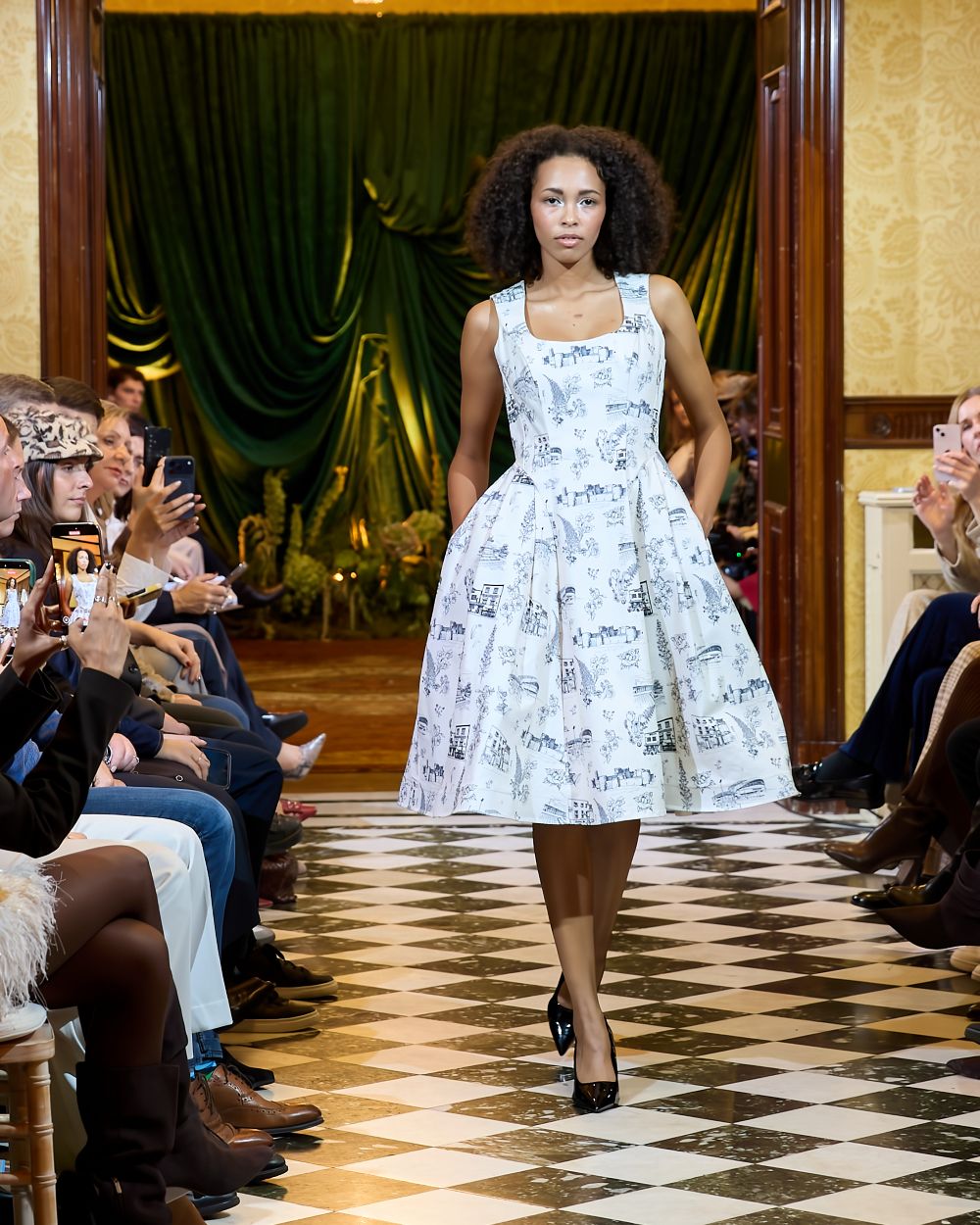
The Jane Mini dress in my Limerick Toile de Jouy print will always hold a special place in my heart. It was one of the first times I approached a bespoke client with a very clear creative idea of my own. I was taking a chance by suggesting the concept, but they immediately embraced it. What made that project so meaningful was seeing the reaction when the client first tried on the finished dress. They began pointing out the landmarks in the print that held personal memories for them, and afterwards, they told me how so many people approached them because of what they were wearing. The dress had become a conversation starter, bringing people together through shared memories of Limerick. The same has happened again with the Cities of Ireland Toile. That was the moment I really understood what I wanted my work to do. I wasn’t just creating a garment; I was creating something that could tell a story, evoke memories and give someone a sense of connection to where they came from.
Another huge moment was selling out my silk scarf collection within 24 hours of launching. The collection had taken around eleven months to develop, with several rounds of sampling, so seeing that response was incredibly rewarding. It was confirmation that people wanted to own the artwork in a different form and that there was an appetite for what I was building beyond bespoke fashion.
And, of course, opening the Irish Roots show at Ireland Fashion Week this year was another milestone. Every one of those moments has reinforced my belief in the direction I’m taking the brand. They’re reminders that an idea that starts with a personal memory can grow into something that resonates with people far beyond your own experience.
When someone picks up a Mary O’Sullivan piece, whether in Ireland or further afield, what do you hope it tells them about where it came from?
Above all, I hope it tells them that they belong. I want my work to celebrate an Ireland where people feel welcome, where our different stories and experiences are valued, and where there’s room for everyone to feel a connection to the place they call home. Every piece begins with a story, whether it’s a landmark, a memory, a familiar street or a detail from our cultural heritage. I want people to find their own meaning in those stories, to recognise something of themselves in the work and to feel proud of where they come from.
I’m also very conscious of creating pieces that will be treasured beyond a single season. The artwork, the attention to detail and the thought behind each design are all important to me. I want someone to wear a piece of my work years from now, pass it on to someone they love and have it carry a story with it. For me, that’s what makes design meaningful. It’s not simply about how something looks today, but about the memories and connections it can hold for years to come.
What legacy would you like the brand to leave, for Irish design and for the next generation of Irish makers?
I’d love Mary O’Sullivan Design to contribute to a future where Irish designers can build ambitious, internationally recognised creative businesses without feeling like they have to leave Ireland to do it. We have extraordinary talent here, and I think there’s so much potential in the way we tell our stories through fashion, textiles, art and design. Our heritage is a rich source of inspiration, but I want to show that it can be interpreted in ways that are contemporary, commercially relevant and exciting to a new generation.
I’d also love the brand to demonstrate that you can build something meaningful even if your circumstances aren’t perfect or your path doesn’t look like everyone else’s. I’ve built this business while raising my daughter, learning as I go and finding my feet as an independent designer. I haven’t had every resource or every answer from the beginning, but I’ve kept showing up, developing my craft and believing in the work. And I couldn’t have done it without the people around me. The support of the community, the people who wear my designs and those who champion independent Irish makers has meant so much. If my journey encourages another young designer to back their own talent, stay in Ireland and build something of their own, that would be a wonderful legacy. I’d love Mary O’Sullivan Design to be known not only for the pieces I’ve created, but for the stories I’ve told, the connections I’ve made and the confidence I’ve helped inspire in the next generation of Irish creatives.
Pre-orders for Mary’s first-ever ready-to-wear collection are open on maryosullivandesign.com until 21 October.