
You might know Kevin McManus from his atmospheric crime fiction and historical novels, but did you know about his unconventional path to becoming an author?
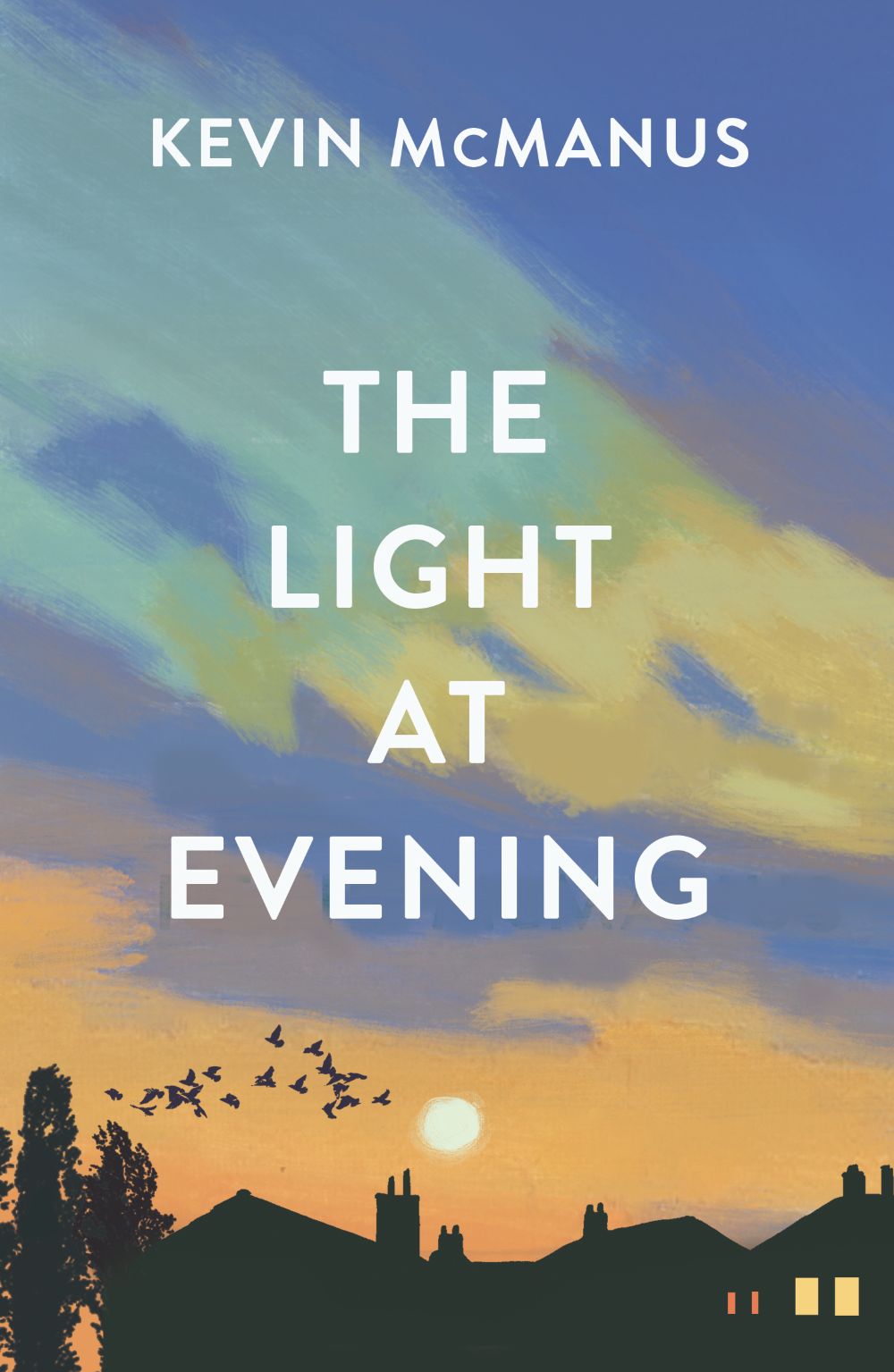
Once a bass guitarist for bands for two decades, Kevin eventually turned his hand to writing – first poems, then short stories and now novels. With multiple novels now under his belt and his latest ‘The Light at Evening‘ on shelves now, he talks to us about his writing career.
Please share a little about yourself and your writing.
I’m a secondary-school history teacher living in County Leitrim, where I’ve spent much of my adult life. Alongside teaching, I’ve written poetry, historical fiction, crime novels and, most recently, literary fiction. Although the genres are very different, they’re all connected by an interest in ordinary people and the stories that shape their lives.
Growing up in rural Ireland, I was surrounded by people who rarely spoke openly about themselves, yet whose lives contained enormous courage, humour and quiet dignity. Those are the people who continue to inspire my writing. The landscape, local history and changing seasons are never just backdrops in my work – they’re part of the emotional life of the characters.
My latest novel, The Light at Evening, is probably my most personal book. It’s about family, responsibility, grief, creativity and hope, and about discovering that even the quietest lives can contain extraordinary emotional depth. It grew from the desire to explore the emotional truth of experiences that many families quietly live through but don’t often speak about.
Have you always known you wanted to write?
I always loved reading, but writing came much later. Reading first inspired me, particularly writers who showed that ordinary lives could carry great emotional depth. John McGahern was especially important to me because he gave dignity to quiet rural lives and found drama in family, memory, work and landscape.
For a long time, I did not imagine that becoming a published author was a realistic possibility. I came from a working-class background, played bass guitar in bands for twenty years, and later returned to education before becoming a secondary-school history teacher. After I retired from music, I still felt that I needed to be creative in some way. I used to write song lyrics, and I began by writing poetry and this led to short stories. Around twenty years ago I began to write what would become my first novel, “The Whole of the Moon”. It took me about five years to write it because I had little confidence at first in myself as a novel writer. However, I persevered and finished it eventually and to everybody’s surprise including my own, I published it. It was a story about growing up in rural Ireland in the 1980s and was well received. I then moved into crime and historical novels. Over time, writing became less of a private ambition and more of a necessary part of my life. I suppose I always enjoyed being creative is some form or another and writing gives me that sense of purpose.
Talk us through your writing process
I’m somewhere between a planner and a discovery writer. I usually begin with a clear sense of the characters and the emotional journey I want them to take rather than every plot detail. I know where I want the story to begin and where I hope it will end, but I leave plenty of room for surprises along the way. Characters often reveal themselves gradually, and some of the best moments arrive unexpectedly.
Because I teach full-time, I write in the evenings, at weekends and during school holidays. I don’t measure my progress by word count as much as by whether I’ve written something truthful that day. Some evenings produce two thousand words, while others produce two paragraphs that survive into the finished novel.
I’ve learned not to force the writing. Sometimes a walk through the countryside or simply sitting quietly is just as important as time spent at the keyboard.
Describe your writing space.
My writing space is quite simple. I work in a small room at home with a desk overlooking the garden. It’s not elaborate, but it’s quiet, and that’s what matters most.
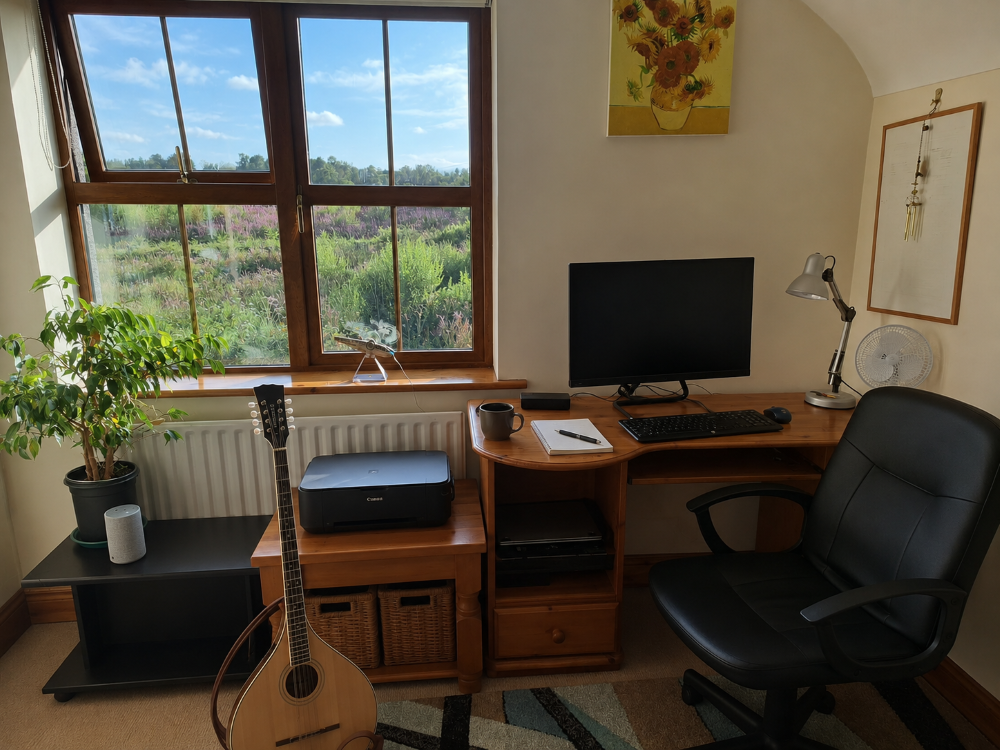
There are books everywhere – novels, history books and poetry collections – and usually a mug of tea close at hand. Outside the window I can watch the seasons changing: birds arriving in spring, leaves turning in autumn and mist settling over the fields in winter.
Living in rural Ireland means the landscape is never very far away, and I think that inevitably finds its way into my writing. Even when I’m indoors, I feel connected to the countryside beyond the window.
What is a piece of writing you wish you had written, and why?
Dermot Healy’s Goat’s Song is one of those rare novels I return to again and again. It captures love, loss and place with extraordinary lyricism and emotional honesty.
I also admire Eugene McCabe’s Death and Nightingales for its sense of landscape and history, and Kent Haruf’s Plainsong for the compassion it shows towards ordinary people.
The books I admire most leave space for silence, and they remind us that the greatest dramas often unfold in ordinary lives. That’s something I continually aspire to in my own writing.
What are your thoughts on AI and writers using it to assist their own writing?
Like any technology, AI is a tool, and its value depends on how it’s used.
I think it can be extremely useful for research, brainstorming ideas or helping writers organise their thoughts. It can even encourage people who might otherwise never begin writing.
Where I think we need to be careful is confusing assistance with authorship. AI can imitate style remarkably well, but it hasn’t lived a life. It hasn’t experienced grief, joy, regret, love or hope. Those experiences remain at the heart of meaningful literature.
Readers connect with emotional truth, and that ultimately comes from the writer rather than the technology. For me, AI is something that can support the creative process, but it can never replace the uniquely human experiences from which stories grow.
Finally, what tips do you have for aspiring writers?
Read widely and read deeply. The best writing teachers are still great books. Write regularly, even if it’s only for half an hour. Inspiration is wonderful when it arrives, but habit is far more dependable.
Don’t worry about trying to sound like a writer. Pay attention to the world around you instead. Listen to conversations in cafés, notice how the light changes across a field, remember family stories, and don’t overlook ordinary lives. They often contain more drama and beauty than we realise.
Finish the work. Inspiration matters, but persistence matters more. Do not wait for ideal conditions because they rarely arrive. Write around work, family and ordinary life, and accept that the first draft does not have to be good; it only has to exist. You can shape and improve something that is written, but not something that remains an idea. Just write, get your thoughts down on paper, you can correct and polish your writing in later drafts. There are all the so called “rules of writing” ignore them, find your own voice, your own natural style.
Finally, be patient. Writing is rarely a straight road. Every unfinished draft, every rejection and every difficult day teaches you something. Keep writing, keep reading and trust that your own voice will emerge in time.
Read next: The art of writing: Author Anne Griffin on becoming an award-winning writer later in life.