
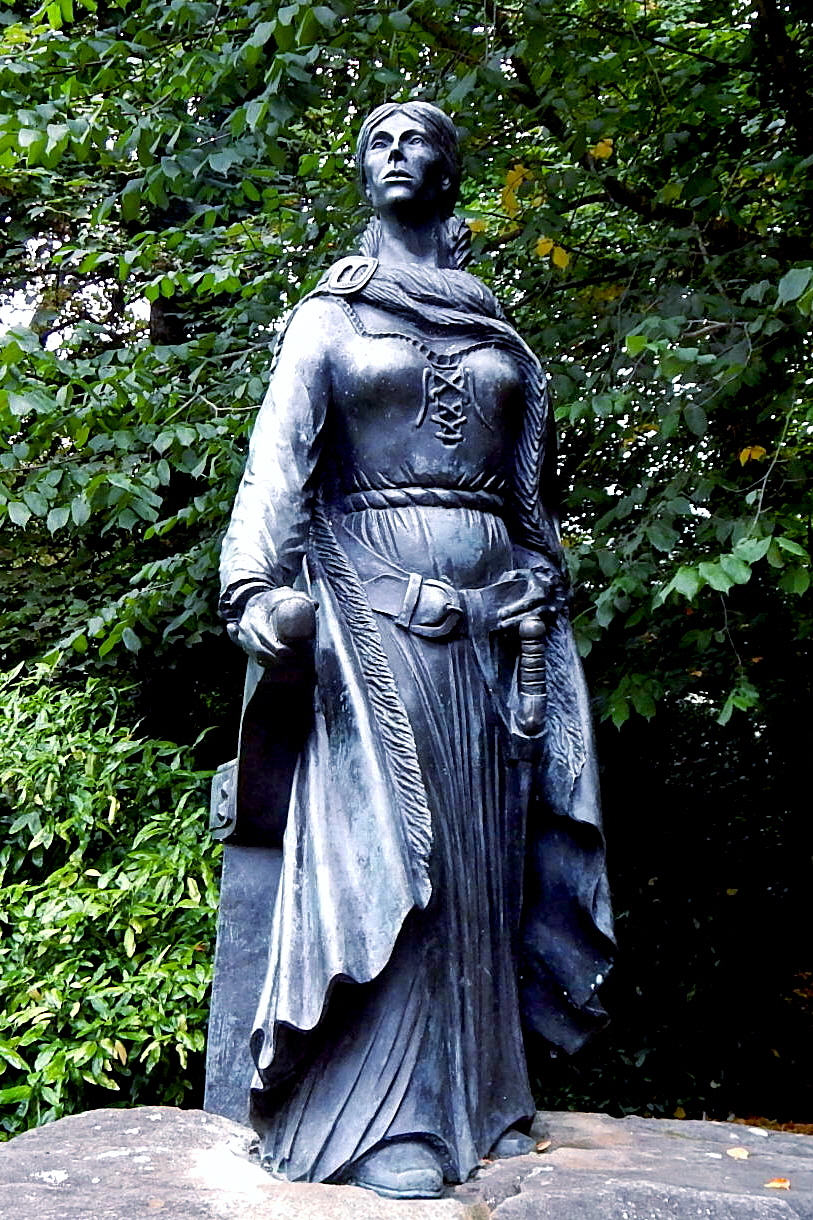
A look at historical figure, Grace O’Malley’s life and legacy.
Across Ireland’s history, women have been at the heart of many of our stories. From queens to warriors, rebels, saints and straight-up legends, from ancient Celtic mythology to real historical figures whose achievements and bravery made Ireland what it is today. This series on legendary Irish women will pay homage to the remarkable women who shaped Ireland’s imagination and identity.
Who was Grace O’Malley?
Gráinne Ní Mháille, otherwise known as Grace O’Malley was a highly regarded 16-century Irish chieftain who lived between 1530-1603. Also referred to as ‘The Pirate Queen’, Grace’s was not only a chieftain but also a sea captain and rebel who commanded the O’Malley clan in County Mayo.
Grace’s father was the leader of the Clew clan, which ruled the seas near Achill island for over 300 years where they would collect taxes from all who passed through. While Grace had an older brother who under Brehon law would would have inherited her father’s position after his passing, it was actually Grace who was granted with it upon his death due to her tenacity and leadership skills. To bypass the Brehon law which generally prevented women from legally inheriting a chieftainship, she moved base to Clare island where she personally built her multi-force clan.
In the first few years of her position she was left to control and dominate as she see fit, however her increasing pirate activities soon caught the attention of Queen Elizabeth I. Of course, at this time Ireland was ruled by the UK, and so Grace’s two sons and half brother were kidnapped by Sir Richard Bingham, the English Governor of Connaught, imprisoning them in Athlone Castle and accusing them of treason. Sir Richard also used a ‘scorched earth’ strategy to punish Grace, seizing her lands and destroying her fleet.
Seeking justice and the release of the three boys, Grace set sail to England, where it’s believed that she met with Queen Elizabeth I and refused to bow before her in front of an audience, or recognise her as the Queen of Ireland. She supposedly stated she was a sovereign queen of her own lands, not a subject of the English crown.It’s also alleged that police found a knife hidden in Grace’s dress before the meeting.
The conversation took place in the only language they shared, Latin and she managed to secure the release of her family, and the queen even agreed to strip Bingham of his command. However, it’s believed that she later went back on the latter agreement.
Grace’s success and private life
Throughout her lifetime, Grace successfully commanded a private army of 200 men and a massive fleet of ships. During that time she also fiercely defended her territories against rival Irish clans and the advancing forces of the English Tudor conquest. She married twice, once at age 15 to Dónal O’Flaherty, a fierce neighboring chieftain-elect. He sadly died in battle after which Grace took charge of his fortress (known as Hen’s Castle) and defended it against attacking rival clans. Her second marriage took place in 1566 when she tactically married Richard Bourke to expand her territory and gain strategic strongholds like Rockfleet Castle.
Grace returned to her hometown of County Mayo and continued managing her maritime domain well into her senior years. In fact, she was recorded actively commanding a retaliatory naval raid at the age of 67. She died at Rockfleet Castle in 1603, the same year as Queen Elizabeth I.
Grace’s legacy
Grace defied both English rule and gender norms with her legacy still standing strong today.
Today, her pioneering legacy is preserved through detailed historical records. She is remembered not only as a local figure in the west of Ireland, but a global symbol of female empowerment and cultural pride for the entire nation. The Cistercian Abbey on Clare Island, which still displays the O’Malley coat of arms, remains a key historical site where she is believed to be buried. A prominent 7-foot-4-inch bronze sculpture by artist Michael Cooper also stands on the grounds of Westport Estate to honor her leadership.
Her name, Grace O’Malley accounts for many residential areas in Howth, Dublin, such as Grace O’Malley Drive, in reference to her ties to the area. In the 1570s, it’s believed that Grace abducted the heir of Howth Castle, after she was denied hospitality by Lord Howth. She only returned the boy on the condition that the gates of the castle never be closed at dinner time and that an extra place always be set for unexpected guests.
She’s also remembered through books, detailing her legacy. A major dramatic television series focusing on her history is in production, co-developed by Oscar-nominated director Kirsten Sheridan. She also remains the subject of countless traditional Irish folk songs – most notably the classic anthem “Oró Sé do Bheatha ‘Bhaile”.