
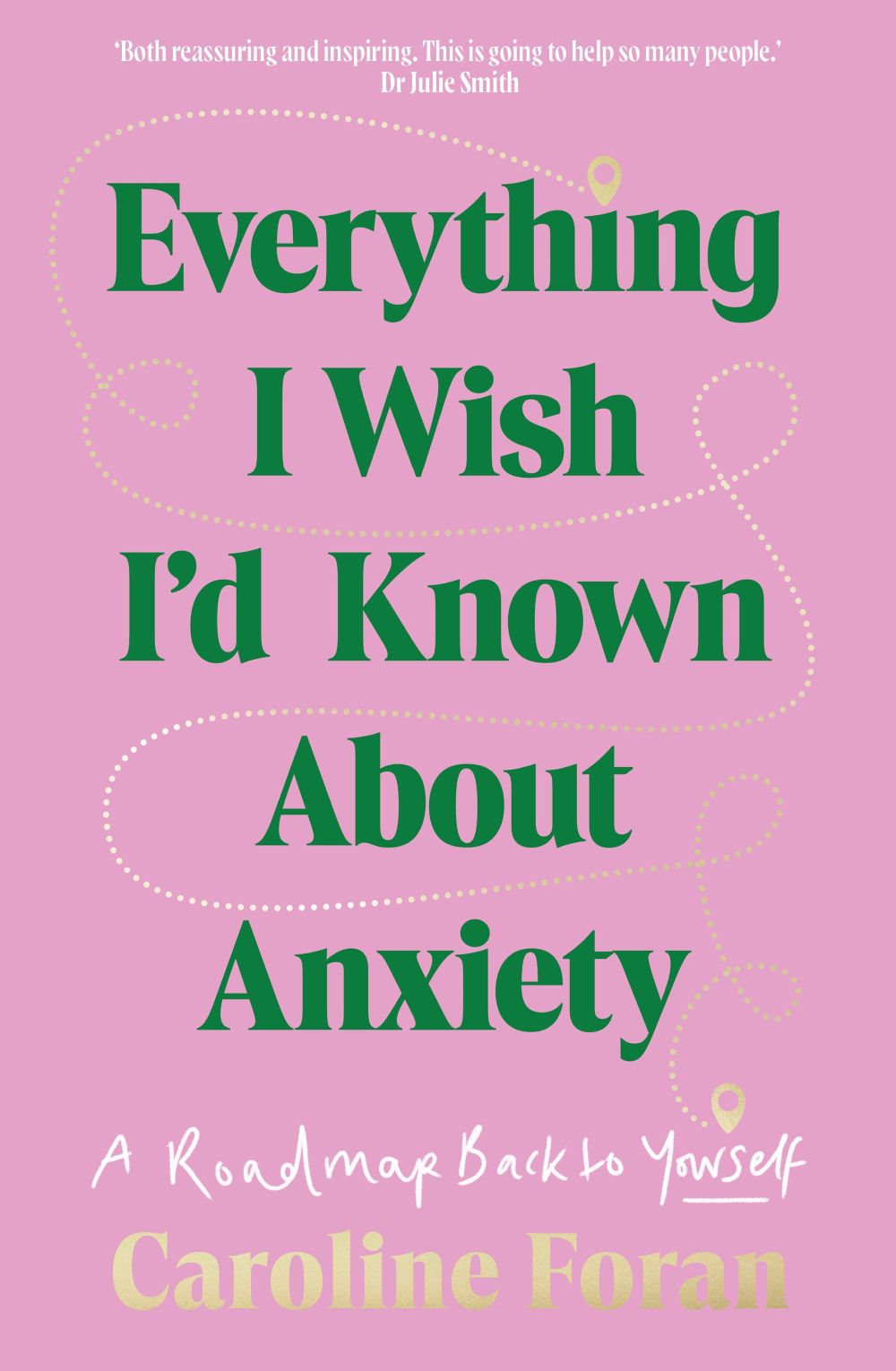
A look at Caroline Foran’s step-by-step roadmap for understanding and overcoming anxiety and chronic overwhelm.
In this exclusive extract from Everything I Wish I’d Known About Anxiety: A Roadmap Back to Yourself, author Caroline looks at why speaking about your anxiety is one of the most effective steps in managing it.

The first stop on the roadmap is talking to someone you trust. It doesn’t have to be the whole world, and in fact, as you’ll see in the next chapter, sometimes it’s best to keep things under your hat to some degree. But if you haven’t yet voiced what you’re feeling – especially if it’s a feeling that’s been growing and doesn’t seem to be tapering off – now’s the time to do so. Even if you’ve been here before, even if you’re someone who goes in and out of anxiety regularly, sharing it is really important.
Even now, when anxiety occasionally knocks me off course – because yes, it still happens from time to time, though it’s never something I can’t handle – the first thing I do is name it. I don’t need to explain every detail or call a town hall meeting. I simply say it out loud to someone who under-stands, someone who won’t react like I’ve suddenly grown two heads. Voicing it immediately makes it smaller and more manageable. It takes the power out of it. Taking the anxiety out of your mind and body and placing it in a dialogue with someone who can offer the kind of compassion you’re still learning to give yourself helps you view it from a more compassionate perspective. This act of sharing allows you to see it more clearly, making self-compassion – and all its soothing benefits – more accessible. Countless people want to weather these storms alone, and we often think it’ll be easier or more commendable that way, but as far as I’m concerned, voicing it is of paramount importance.
Why does it work? For starters, sharing it has always had a significant and immediate impact on my own nervous system. Only when I voice it can it begin to dissipate. The longer I leave it unaddressed, the harder the knot is to unravel. Beyond my own experience, though, there’s plenty of science behind it. When we label and express our emotions, we activate regions of the brain that swing into action, regulating our emotional responses. A study by UCLA psychologist Matthew Lieberman found that when we describe fearful or distressing stimuli, we engage the prefrontal cortex, which is the part of the brain that gets sidelined when anxiety strikes but is crucial for calming the amygdala, which is our brain’s alarm system. Articulating our anxiety brings our prefrontal cortex back online, dial-ling down the intensity of the emotion and helping us step out of the fight-or-flight response. The study demonstrated that voicing our anxiety helps us shift towards what’s known as cognitive reappraisal, creating some space between our-selves and the anxiety, allowing us to then view it more objectively. This is significant because, as we’ll discuss later, how we perceive our experience of anxiety matters more than the presence of anxiety in our bodies.
What’s the point of sharing?
But why share it with someone else? Why not just voice it to yourself or write it in a journal? The social element drives the benefits home. Sharing our emotions with the right person fosters empathy and social bonding, activating the brain’s reward system. This sense of connection and support further downregulates the anxiety. You might think that voicing it to someone makes it bigger than it needs to be or gives it more attention than it deserves. That’s straight out of the ‘suffer in silence’ playbook. But the opposite is true. I can vouch for this from my own experience: sharing doesn’t make the anxiety bigger, it helps us contain it. If we treat our anxiety as something to hide, suppress or ignore, we’re effectively shaming ourselves for feeling it – invalidating something that, regardless of the circumstances, is always valid. As a result, we end up amplifying it. Sharing shifts the dynamic, allowing us to accept it. Which gives me a timely opportunity to remind you of what I wish someone had told me: nothing changes until we can accept it.
One of the best books I’ve read on this topic is The Chimp Paradox by Steven Peters. In it, he explains how our brain is wired to react like a chimp – throwing tantrums when ignored or not given attention. If we don’t address our anxiety, it makes more noise, becoming more destructive, like a caged chimp who is convinced he needs to run riot only because he’s been caged in the first place. But when we give it the attention it needs – simply by naming it – we reassure the anxious part of ourselves that it’s okay. It’s not something you don’t have to feel. The chimp doesn’t need to disappear. This defuses the tension, and the chimp no longer feels the need to go bananas (couldn’t resist that one).
The right ear
Of course, choosing the right person to share with is key. Talking to the wrong person – someone who belittles or dismisses your anxiety – will only heighten your nervous system’s reaction. I say this from experience. I’ve got the ‘who to tell’ part very wrong, only to be left feeling gaslit by someone I thought was a supportive friend. So think of the one person in your life who never makes you feel like you need to be anything other than yourself. Who can you trust to sit with you in discomfort without judgement? Who makes you feel safe? Do you know anyone who’s been through this and can relate? Of course you do. Can they contain and ‘hold space’ for how big this feels for you? That’s the person you want to confide in. The right person will respond with empathy and compassion, helping to normalise your experience rather than making a bigger deal of it, which might make you panic more. A calm, supportive response from someone you trust not only comforts you but also reinforces the calm in your prefrontal cortex, doubling the brainpower to regulate the anxiety. Essentially, by sharing with the right person, you’re getting two prefrontal cortexes for the price of one.
Everything I Wish I’d Known About Anxiety: A Roadmap Back to Yourself by Caroline Foran is published by Gill Books and is out now.