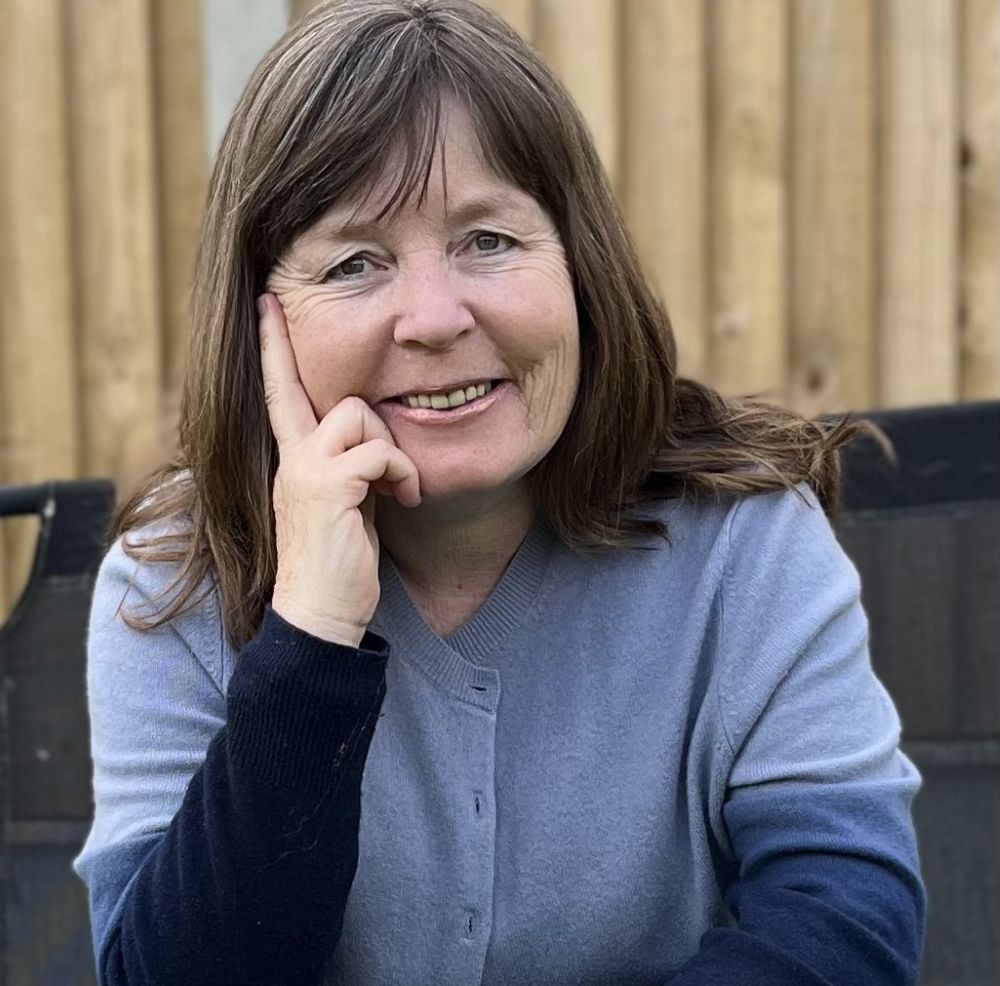
Writer Jessica Francis chats with Jenny O’Brien about combining her love for crafting and writing.
Whilst many of us use hobbies as a way to find peace in a busy world, for Dublin-born author Jenny O’Brien, taking part in traditional crafts is so much more than just a hobby; they inspire her novels. From nursing to becoming a successful crime fiction writer, Jenny has found a new way to bring together her passions of crafting and writing in her captivating new historical series set in WW II.
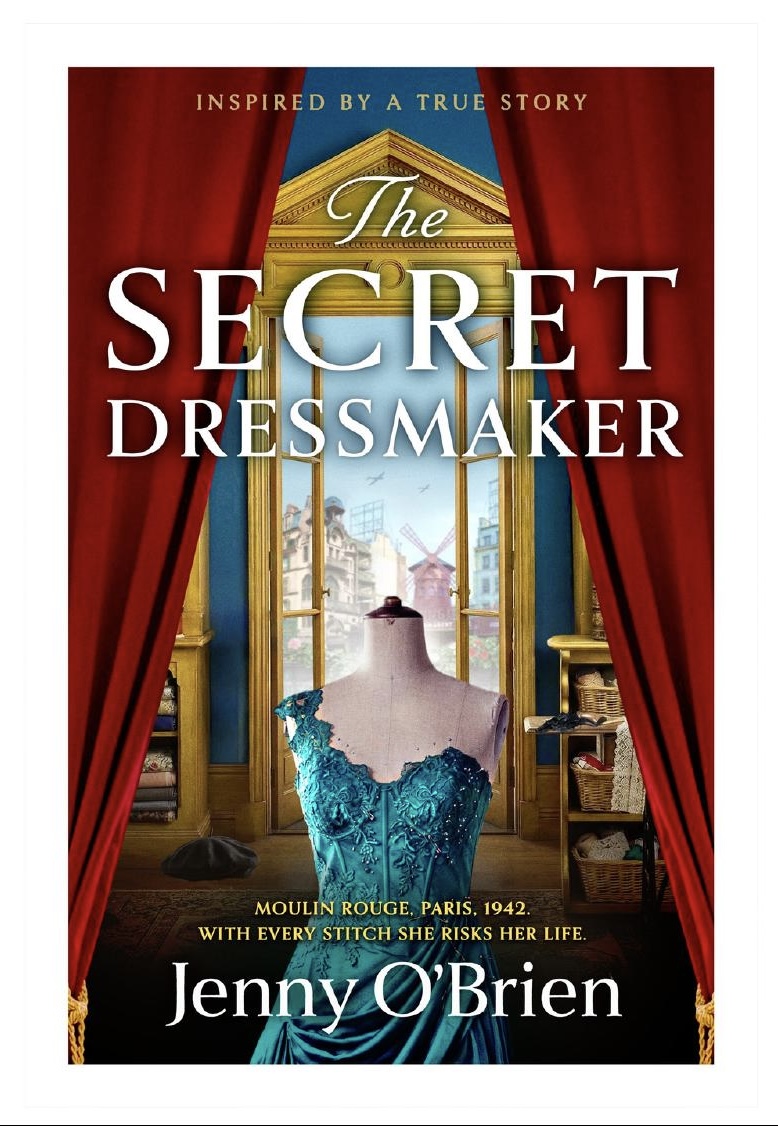
Following her success with The Resistance Knitting Club, the latest release and her newest addition to the series, The Secret Dressmaker, takes readers on a journey to Paris to explore the world of haute couture.
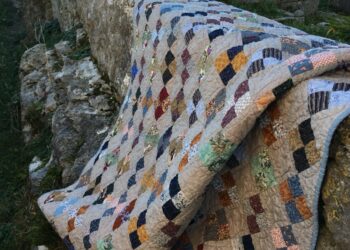
At the very heart of this novel is the heirloom calendar quilt. Designed by Jenny, the distinct 365-square quilt was created for her protagonist as a way to pass coded messages between resistant cells. Jenny didn’t stop at just writing about the quilt; she spent weeks sitting at her own sewing machine, bringing the design to life, crafting a real-life heirloom to record her own family’s history.
We caught up with Jenny to find out more about her Irish roots, her move from Dublin to Guernsey and how her passion for crafting sits at the centre of her newest novel.
Tell us a little bit about yourself and how your background as a writer and crafter led you to this new series?
I was born in Dublin and trained as a nurse. Even then, when I wasn’t working, I was either reading or crafting. I was offered a job at the hospital on the island of Guernsey in the eighties, which is where I currently live.
I started writing about twenty years ago. I’d always intended to write a book but never got around to it. One day, I was on my fifteen-minute coffee break from the ward and feeling bored, I turned to the back of my notebook and wrote a few words. Within six weeks I had the draft of my first book.
In those early days, I dabbled in a few genres, finally settling on crime fiction and I was lucky to be taken on by HarperCollins for a six-book police procedural series. I was still crafting. Primarily dressmaking and knitting clothes for the children. Towards the end of my contract with HarperCollins, my writing was changing. Storm Publishing was interested in seeing something different from me, so they were the publisher I approached when I had an idea for a historical fiction novel.
The Secret Dressmaker is the second in a series of books featuring crafting at their heart. The first, The Resistance Knitting Club, explores coding during WWII while The Secret Dressmaker concentrates on dressmaking and quilting.
What was it that inspired you to create the Heirloom Calendar Quilt, and how does it connect to your next book in the series, The Secret Dressmaker?
The Secret Dressmaker is set in the world of haute couture in Paris during WWII and, to be truthful, quilting wasn’t going to feature. I have made a quilt before, but this was many years ago. I’m more of a knitter these days. Then I heard about a new charity that was being set up in the island. Little Quilts Big Hugs, a small group of volunteers who make quilts to donate to our hospice and premature baby foundation. I attended one of their meet-ups and knew it was something that I wanted to include. It was the link I needed to connect the first book in the series to the second one.
How and why did you decide that in the novel the Quilt is used to send coded messages?
As I mentioned above, I was looking for a seamless way of connecting the two books. Flora Toussaint, my main character, travels from where she works in a parachute factory in Carrickfergus back to Paris where she was born, on a mission to help confirm that the father of her children is a traitor. She gets a job working in the sewing room at Le Moulin Rouge where the other seamstresses save up scraps to make quilts for the needy. She has the idea of incorporating a code into the quilts, which could be used to pass on information between the different resistance cells operating in France.
Nineteen by nineteen gives 361 squares, just four short of the 365 needed for the Calendar Quilt. Those four squares are easily slotted into the border. That’s how the Calendar Quilt was born.
The idea of the Heirloom Calendar Quilt came to me while I was making it. I like to try out my designs to check that they work. Adding hearts and embroidered names to the squares of my family’s birthdays seemed the perfect finishing touch.
How long did the process of making the quilt take, and what were the most challenging parts?
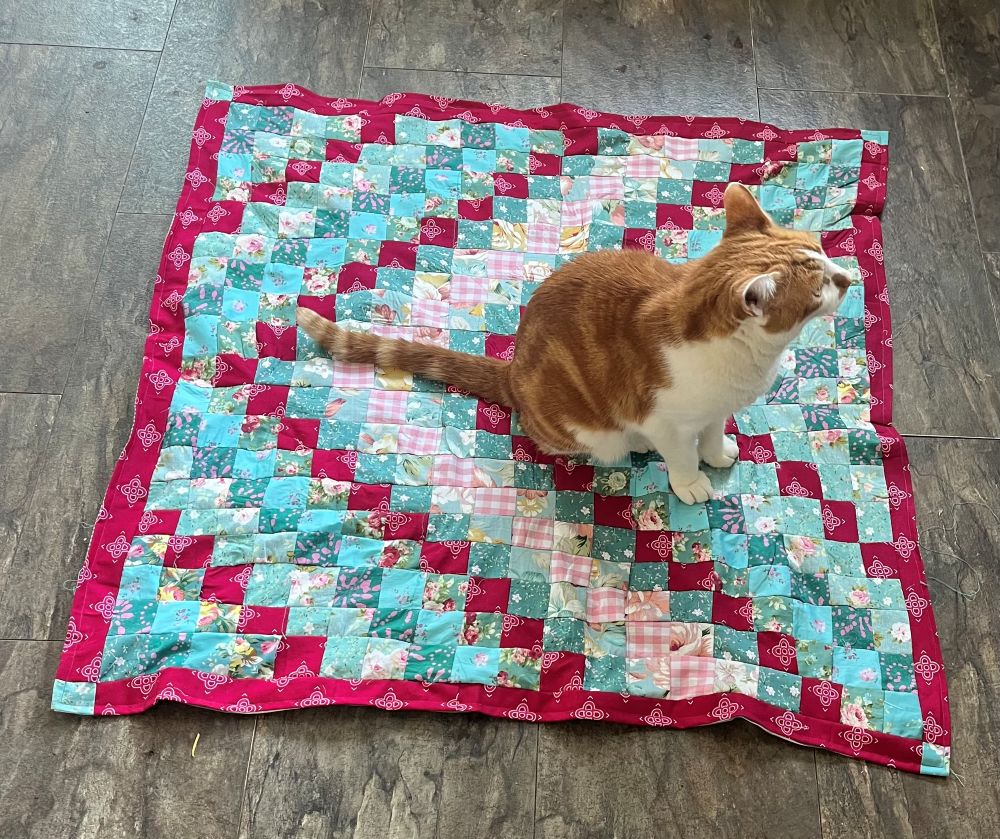
In total, it took three weeks and I found all of it challenging. I hand pieced the first one I made many years ago. For this one I used a machine and, while it’s nowhere near the standard of some of the designs I’ve seen, I’m delighted with what I’ve learnt along the way. I wish I’d thought through the process a little more. In the book, I added different coloured squares to denote which way is up, which was vital to the plot. I also addressed what to do in a leap year. For this one, I worked a V into the design instead.
What does the creation of this heirloom mean to you, and how did it feel to incorporate your own family’s names and dates?
It doesn’t matter that it’s not perfect. It’s far from perfect. I once read that leaving a deliberate flaw in a handmade piece is an important part of the process. It wasn’t about creating something perfect. It was to create something special for my daughter, which she could then hand down. I’m going to leave her to embroider the hearts to the squares and work on how she wants to incorporate our family history into the piece. Between you and me, she’s a much better crafter than I will ever be.
Does your experience being a crafter influence the way you write historical fiction?
I’m lucky that I’ve found a way of combining my two passions of writing and crafting. I wouldn’t have been able to write these books without it. Working on the books has also reignited my love of crafting. I only mastered crochet recently. Now I’m obsessed.
The third book in the series comes out in 2027 and, unsurprisingly, features another traditional craft at its heart. I am currently researching the fourth.
Written by Jessica Francis.