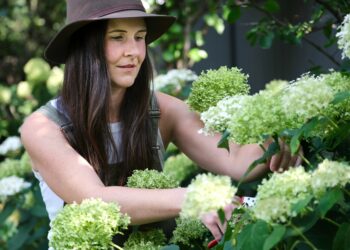
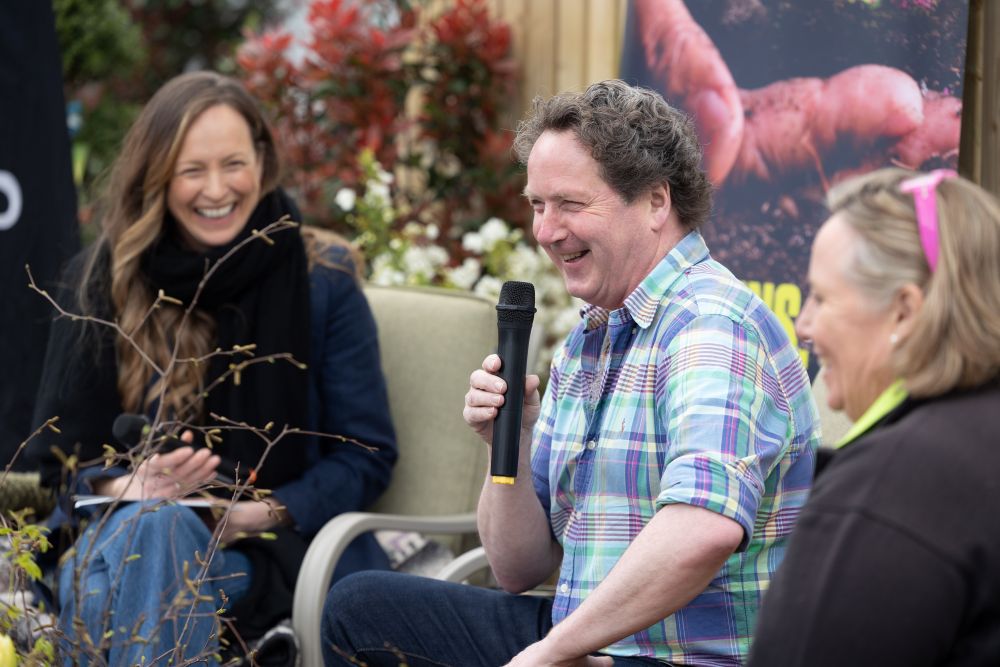
Irish Country Magazine gardening columnist Leonie Cornelius attended 2026’s Bord Bia Bloom festival, and is sharing the garden design trends set to take over our outdoor spaces this year.
Oh Bloom you beauty. There is something about the amazing food and horticulture festival that gets me every time. Maybe it’s the Phoenix Park itself, that particular quality of early
morning light when the gates open and the dew is still on everything. Maybe it’s the fact that after twenty years it still has the ability to surprise you. This year, in its landmark 20th
edition, it did that.
I’ve been coming to Bloom since the early days, and I’ve designed six show gardens here myself, so I know from the inside what goes into these spaces. The weeks of planning, the
sleepless nights before judging day, the intensity of the build, stepping into the gates sparks something in me that’s quite powerful.
This year, I decided to take a year out from the show garden side and instead do some talks and MC the garden stage, but the show gardens are still like a magnet for me.
Let me tell you, walking it as a visitor to the show garden section is a different experience when you don’t have a garden there yourself. You get to slow down and drink it all in and
let the gardens wash over you. The designers visions, the plants settling in, the pollinators starting to make the spaces their own. I am so proud of what all the talented designers have achieved this year- the show is very special.
Here’s what I’m taking home from Bloom 2026, and what you can too.
Monolithic forms and wild planting
One of the strongest design threads running through Bloom 2026 was the conversation between hard, monumental forms and soft, wild planting spilling around them. It kept appearing in different gardens, in different materials but with an equally powerful effect.
Joe Eustace’s Future in Mind garden for the Mental Health Commission was one of the most striking examples. Big chunky boulders with soft wild planting spilling around and
between them, the brutalist forms made gentle by everything growing at their feet. His garden is a study in restraint and confidence and is the first space you lay your eyes on when you enter the show garden area.
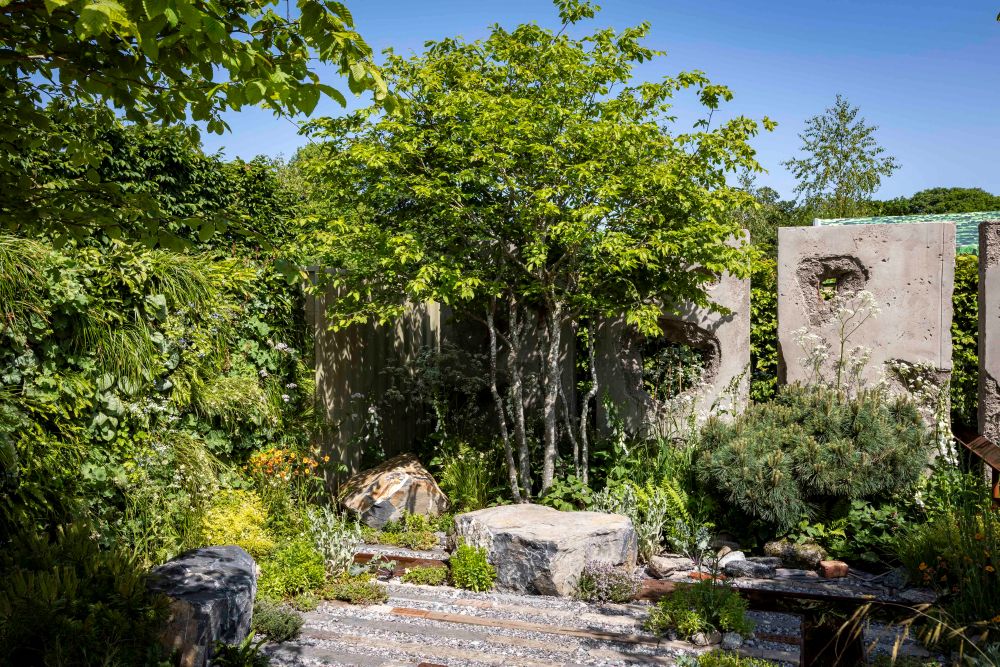
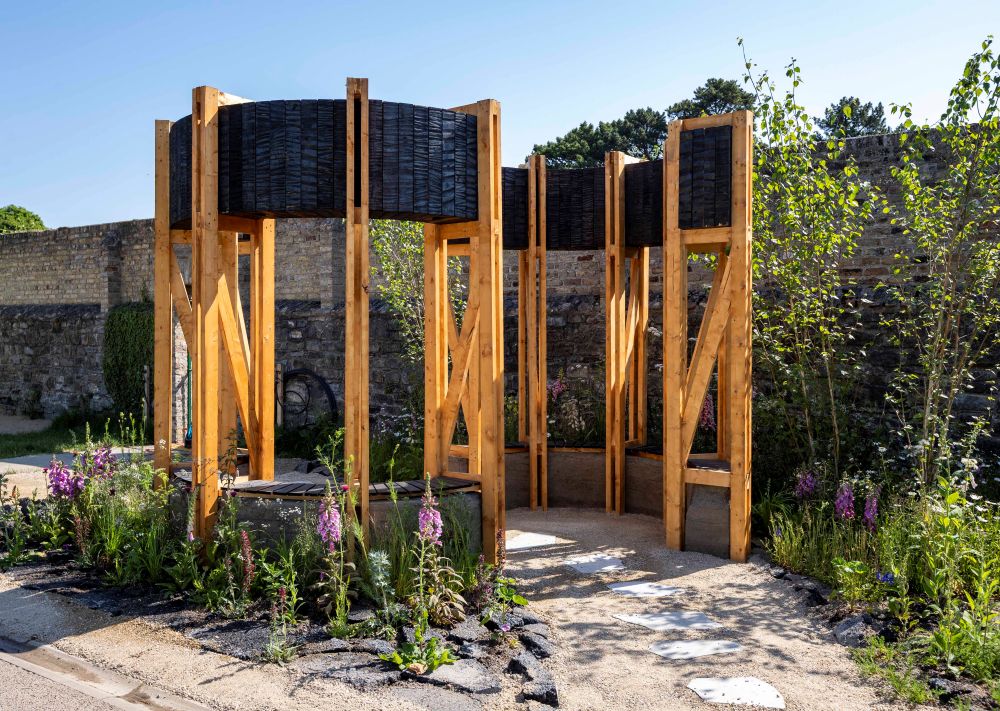
David Negus’s Rooted in Resilience garden for Myeloma Ireland carried the same quality. Chunky stones and timber pieces, almost boulder-like in their form, with planting that
softened and surrounded them completely. Following on from last year’s gorgeous garden which embraced recycled and reused materials, this garden which is about the resilience of
people living with myeloma, was deeply moving. After the show it travels to Cois Nore Cancer Support Centre in Kilkenny, where it’ll become a permanent space for people who really need it.
Bring the inspiration home: The lesson for your own garden is a beautiful one. You don’t need to soften everything. One strong, bold structural element, a large stone, a chunky timber form,
something with real weight and presence, surrounded by planting that’s allowed to be a little wild, creates a tension that makes both things better.
Designer tip: like in a good Japanese rock garden, irregular triangles create special kind of magic. Placing boulders in an irregular triangle, planting the same plant in repetition in
irregular triangles or even trees placed in a regular triangle groupings is a really clever way to bring coherence to a design. The hard landscaping really helps set off the softer parts
and brings a special kind of magic to a space.
Sculpture as the point
Bloom 2026 had more sculpture than I can remember, and what made it exciting was that it wasn’t being used decoratively. It was doing the work of the garden.
Linda McKeown’s Nature in Balance garden had a stunning bull sculpture by Daniel Philips rising on the upper level of the garden above a modern pergola below. The contrast
between the sculptural figure and the agricultural setting, the wild meadow planting all around it, was really beautiful. Linda is based in Belfast and her work always has a soft,
considered intelligence to it. This garden made the argument for organic farming through beauty rather than didacticism, which is so much more powerful.
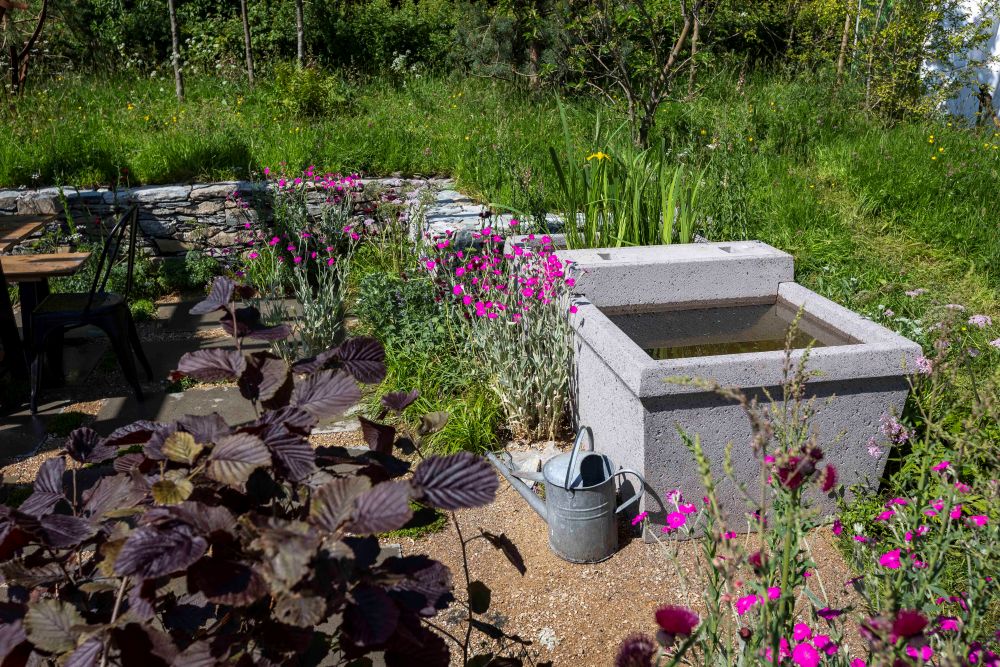
Oliver and Liat Schurmann’s Shared Roots, Common Shade garden, celebrating Ireland’s Presidency of the Council of the EU with a tree for each of the 27 member states, had a
strong central sculpture rising from a pond that was genuinely powerful. The Schurmanns are on their fourteenth show garden at Bloom, which is extraordinary, and this one had a
real sense of occasion.
Robert Moore’s Empowering at Every Step garden for the Marie Keating Foundation had sculptural elements that stayed with me long after I’d left. From his own collection, they
spoke about balance, healing and the cancer journey. They brought such a beautiful focal element to the Garden space.
Maeve O’Neill’s 20th Edition Bloom Gallery Garden was a beautiful and moving tribute to the show’s twenty years, with sculptural elements throughout and a real sense of
occasion. It was beautifully put together and allowed you to weave through the space or rest on a bench.
Bring the inspiration home:
Sometimes the addition of a small sculptural element at the bottom of a garden can become an incredibly powerful focal point. It can be anything from beautiful steel Sculpture
to a home-made carved piece of timber or a large boulder. The idea is to create something the eye can follow at the bottom of a space and to plant softly around that to frame it. It’s a
very powerful tip to creating perspective, movement and connections between one space and another in the garden.
Reclaimed materials and rusted steel
James Purdy’s Recycled, Reused and Refilled sculptural garden for Repak showed what happens when a designer commits completely to circular materials and uses them with real design intelligence. The oval pool really reflected the concept and felt so calm and balanced. Reclaimed and recycled materials used not as a gesture toward sustainability but
as the whole point.
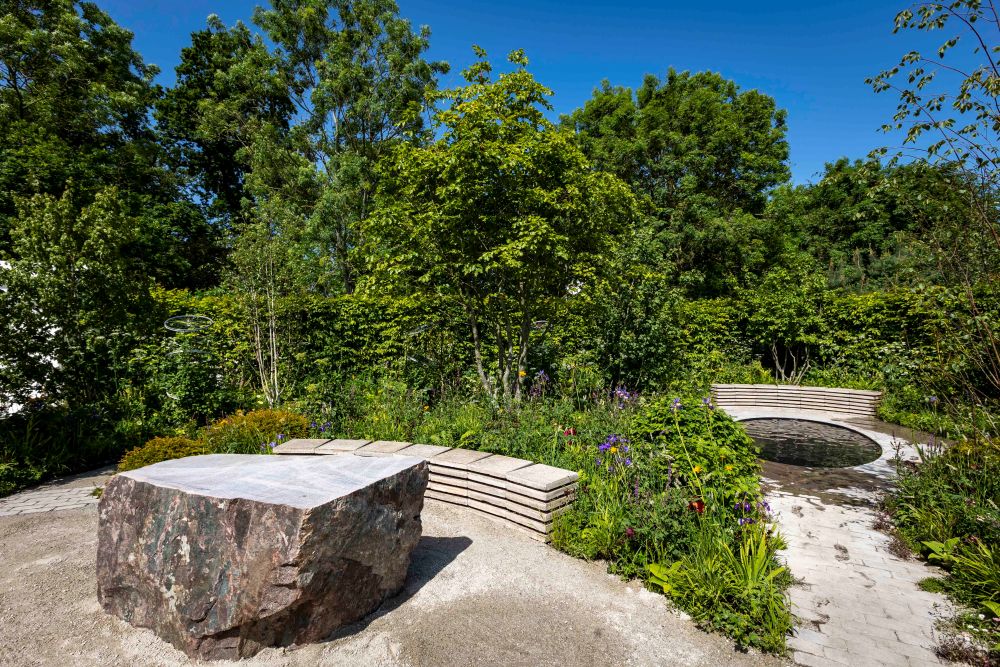
Joe Eustace’s garden also deserves a special mention here in the genius use of rusted steel in so many different forms, shapes and patterns. The rusted steel really served as the
backbone for a space and provided a stunning backdrop for the planting which softly mounded around it. The water features were just inspired.
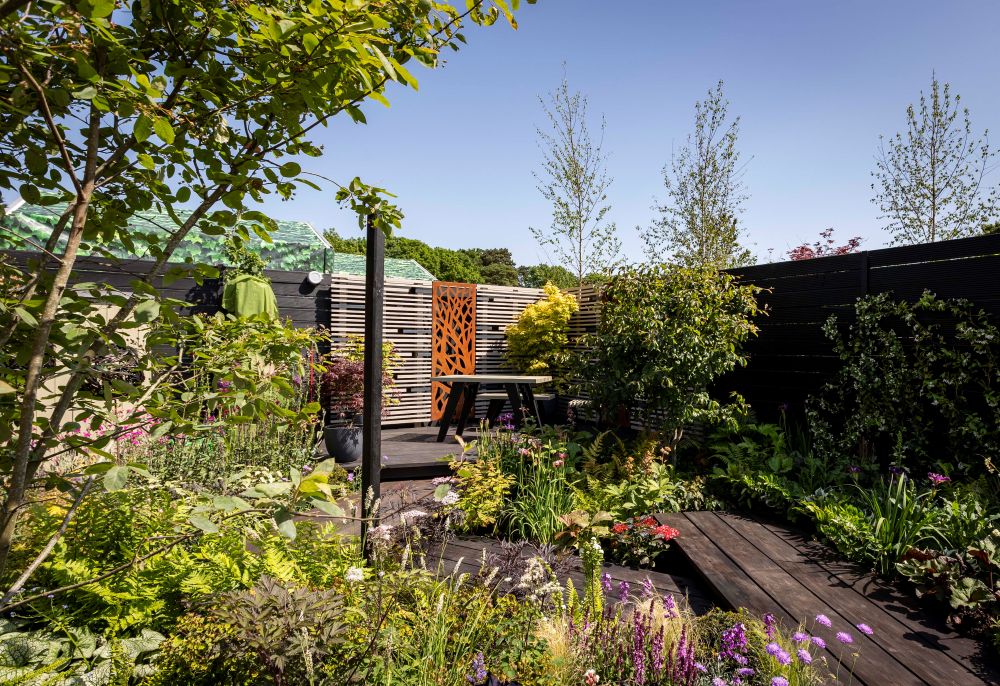
Carleen Osborne’s I Can Create That Garden was a lovely garden that proves you don’t need a big budget or a professional build team to create something beautiful. Reclaimed
scaffolding boards, charred and sealed for a distinctive finish. Screens made from affordable roofing battens. Bespoke furniture handmade from standard section timber. Even a discreet retractable drying line tucked in. It was a lovely use of space.
Bring the inspiration home: before you reach for new paving or standard concrete, ask what else is available. Reclaimed stone, reclaimed timber,
soft, used materials that carry history. Or if you’re handy yourself- use your imagination and skills to create something fun yourself. These kind of materials bring a warmth and a
character that conventional alternatives can’t replicate.
Gardens that were alive
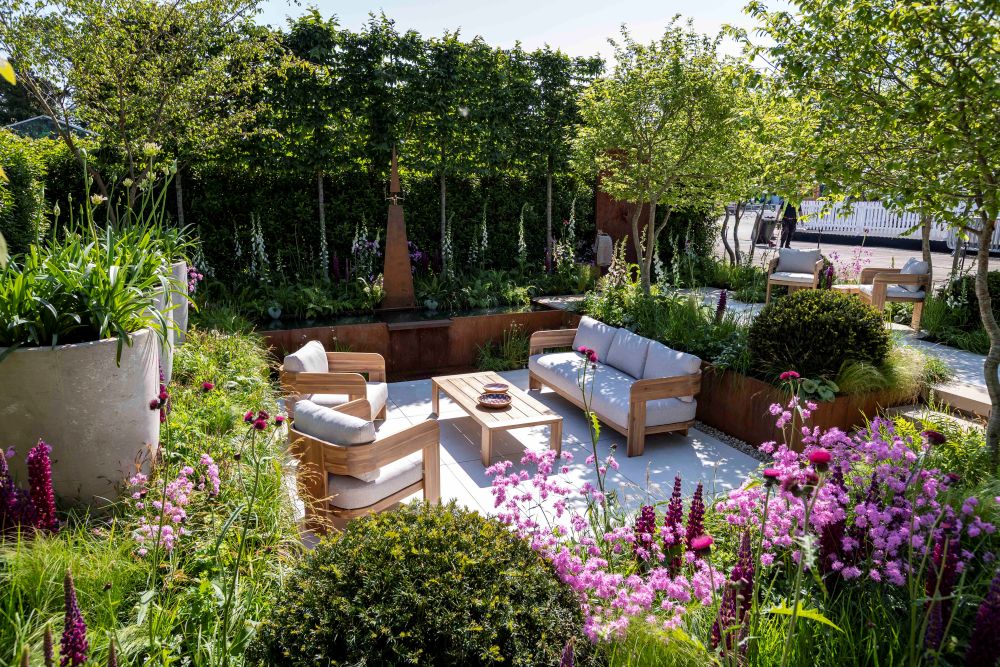
Declan McKenna’s Celebrity Dream Garden, inspired by Brendan Courtney’s real Wicklow garden, was warm and personal and exactly what a celebrity garden should be, something you could actually imagine living in. It had that feeling of wanting you to slow down and spend time in it, exploring the space and enjoying it. The sunken patio was beautiful and thoughtfully treated by Declan and the Silverstream team. The full design plan, planting plan and plant list are available to download from the Bord Bia Bloom website so you can recreate it at home, which is a lovely idea.
Jack Donovan’s Alltar garden, this year’s Cultivating Talent winner, was perhaps the most sculptural space at the show. The entire garden felt like a piece of art, spontaneous
vegetation and the resilience of plants in disturbed ground explored through forms that were genuinely arresting. But what we really noticed most about Alltar was that it was full of
people. While some gardens at Bloom were quiet and respectfully observed from a distance, Alltar was alive with visitors who had simply sat down and stayed. It had become a communal space before it had even found its permanent home. That’s a very special quality in a garden.
The Fingal Nurturing Communities Through Nature garden had a similar quality. A vibrant, communal space that felt alive with people, buzzing with the energy of a garden
that knows exactly what it’s for. Designed by Áit Urbanism and Landscape for Fingal County Council, it’s going after the show to Brackenstown Wild Garden in Swords, where a
community gardening group will be established. A garden that was already doing its job beautifully at the show before it had found its permanent home.
Joshua Fenton’s Citroën Family Flexible Garden was another space that rewarded a slow wander. Full of areas to discover, it had a lovely little tipi tucked into the corner that felt like exactly the kind of thing a child would disappear into for an hour. A garden designed around how a family actually lives, different corners for different moments, different ages,
different moods. It was really well thought through.
The Met Éireann 90th Anniversary garden by Paul Dunne and Padraic Woods was one of the most genuinely original concepts at the show. Native birch woodland, seasonal
meadow and wetland planting, a refurbished boat on a pond, an oversized umbrella representing Ireland’s rainfall, and at the heart of it actual weather instruments, Stevenson
screens, sunshine recorders, rain gauges and live data feeds. Fascinating.
Kakha Gigauri and Michael O’Connor’s A Moment for Myself garden for Leaf 2 Leaf Landscapes was a beautiful restorative space with fascinating structures, a garden that
asked you to stop, breathe and just be for a moment. Exactly what its name promised.
Last but not least, a garden worth mentioning was the Super Garden this year which had a lovely story behind it. Sean Melia won a Silver Gilt, following in the footsteps of his father
Dermot, who took part in Super Garden himself. There’s something really special about that kind of passing of the torch, and it felt very Bloom.
Bringing the ideas home: I think this is one of the most useful things Bloom can teach us. The best gardens aren’t the ones that impress you from a distance. They’re the ones that make you want to be inside them. That’s worth thinking about when you’re planning your own outdoor space. How do you see yourself interacting with the space? What does the space want to bring to your everyday? Fun, family, friends, entertainment? Slowing down, rejuvenation, calm….this can tell you a lot about the design decisions and can become a blueprint you can work from.
Birds & Bees and all things wild
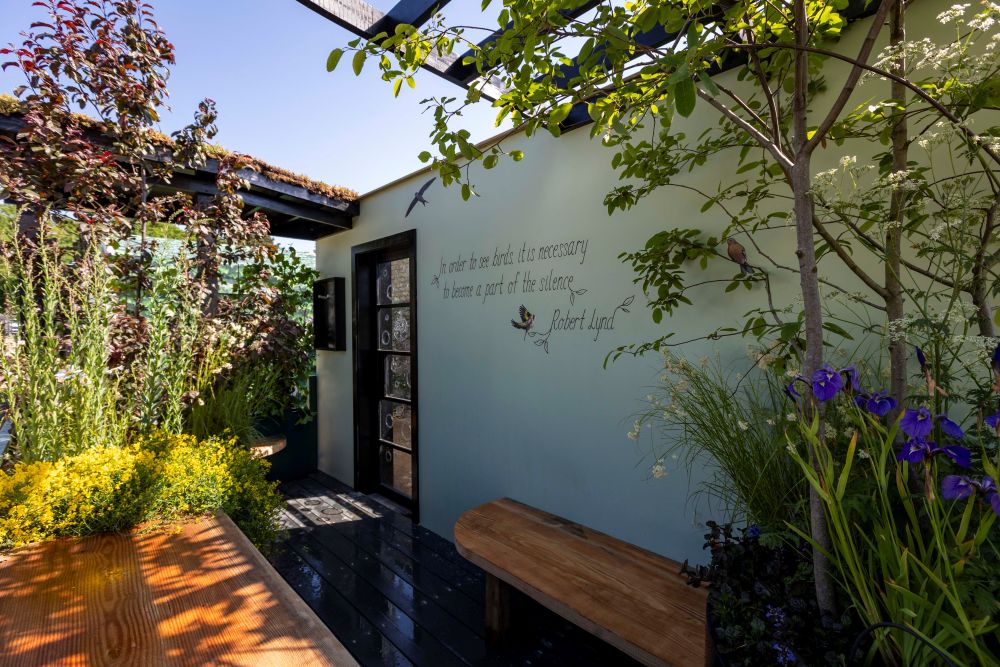
Barry Kavanagh’s Birdwatcher’s Balcony, sponsored by RTÉ Radio 1 and Mooney Goes Wild, was one of my favourite small spaces at the show. It had a real sanctuary quality to it, a Gaian wall effect that was almost industrial in its structure but completely alive with wildlife features, twigs and natural materials woven into it in a way that felt both designed
and completely natural. A small space that felt generous. A reminder that a balcony or a terrace can be a genuine wildlife habitat if you’re willing to think about it that way.
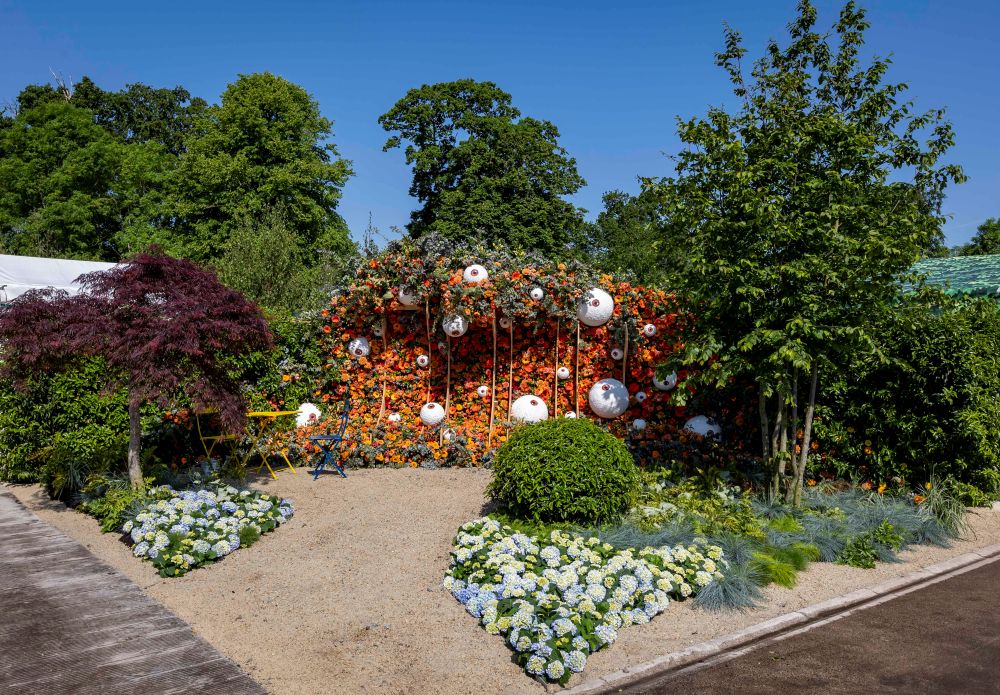
The Minions and Monsters Garden by Benny Magennis, sponsored by Universal Pictures, was one of the most joyful spaces at the show for a very specific reason: it was absolutely surrounded by children when I walked by. That vivid orange, those references the kids immediately recognised, the sheer delight on their faces. It was a lovely reminder that a garden doesn’t always have to be serene to be doing its job. Sometimes bringing pure joy is exactly the point. And watching children genuinely excited about a garden space, pulling their parents over, pointing things out, not wanting to leave, was one of the loveliest things I saw all day.
The Postcard Gardens: The standard of the incredible tiny postcard gardens, which are sponsored by Tirlán CountryLife was incredible this year and deserve an extra mention as I know from my own balcony garden in 2024 – designing on a small scale is often more difficult than creating a larger garden. Every detail matters. These concept driven pockets of design of 3 x 2 m size were alive with the ideas of communities coming together to create spaces which were truly special. From rainbow coloured pollinator gardens, GAA tea groups to stunning ceramic works by a pottery studio and so much more. These spaces were gorgeous real, heart filled collaborative spaces.
Leonie Cornelius is an award winning garden designer, interior architect and bestselling author. www.leoniecornelius.com.